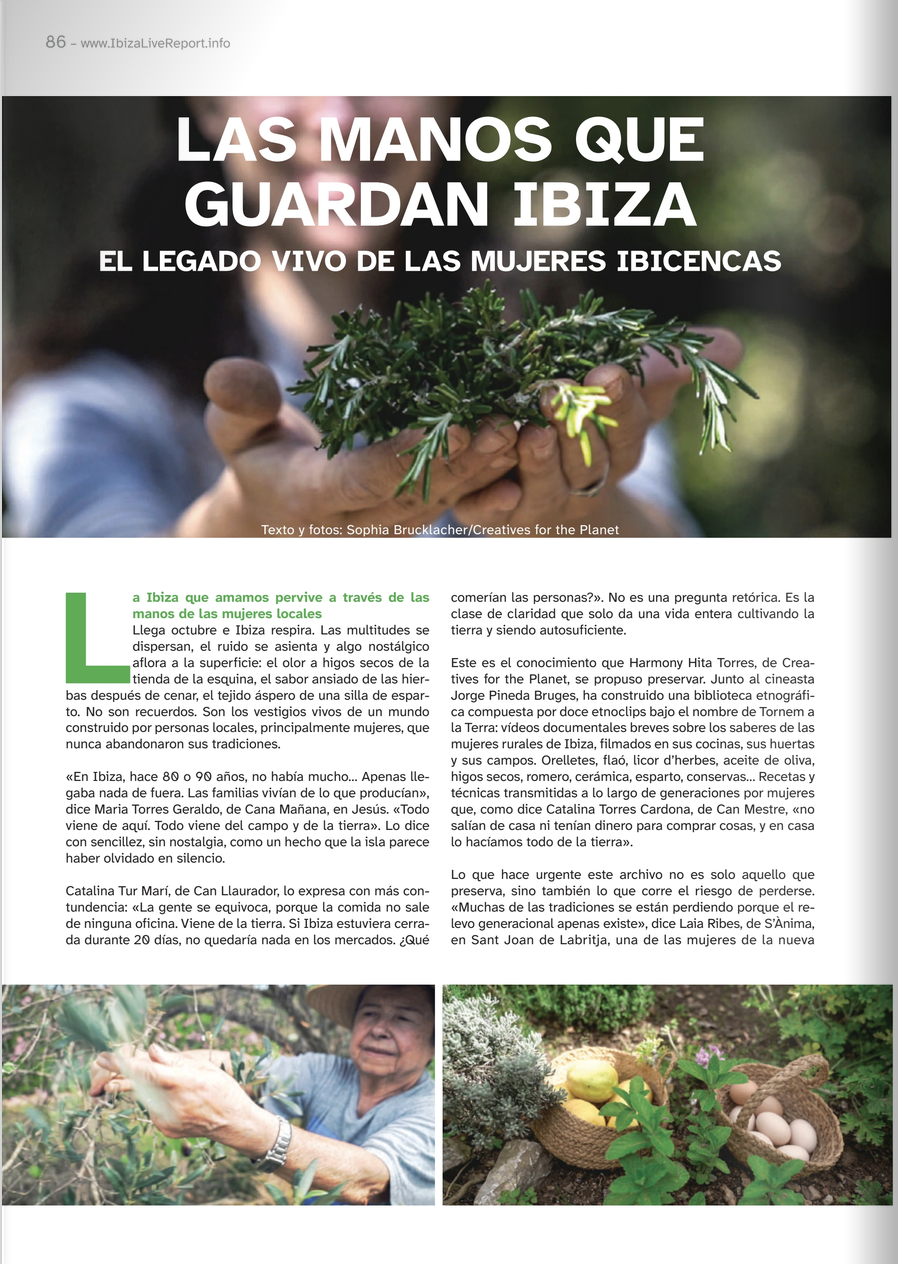
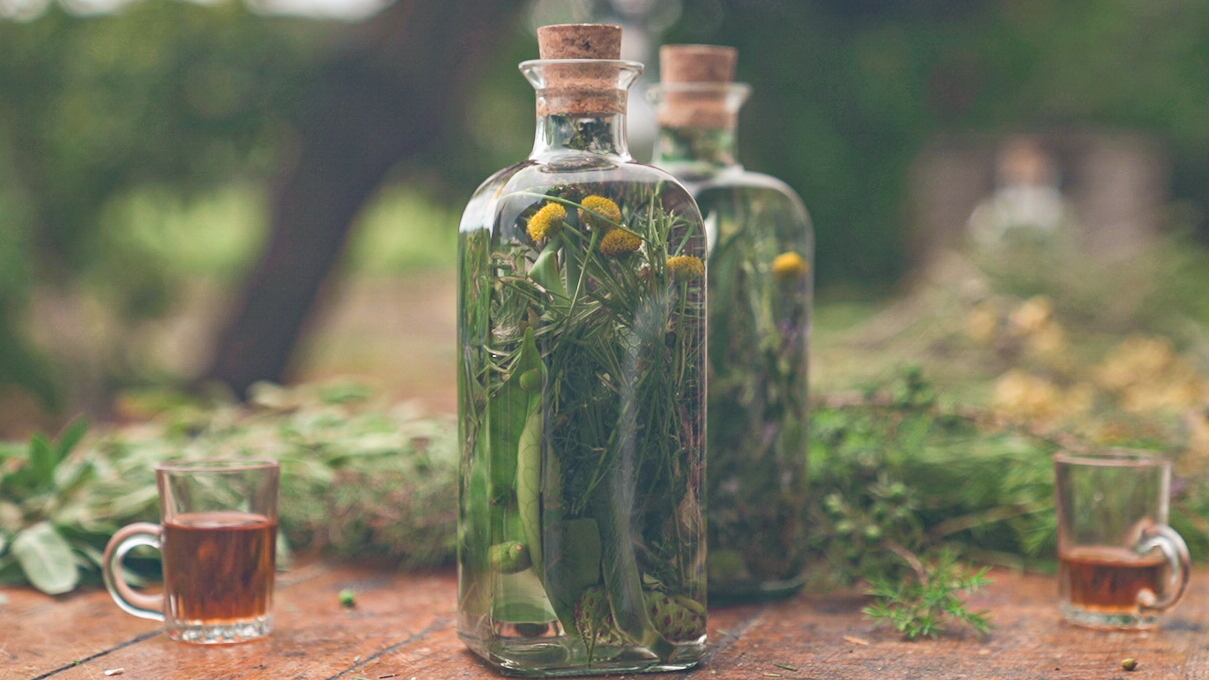
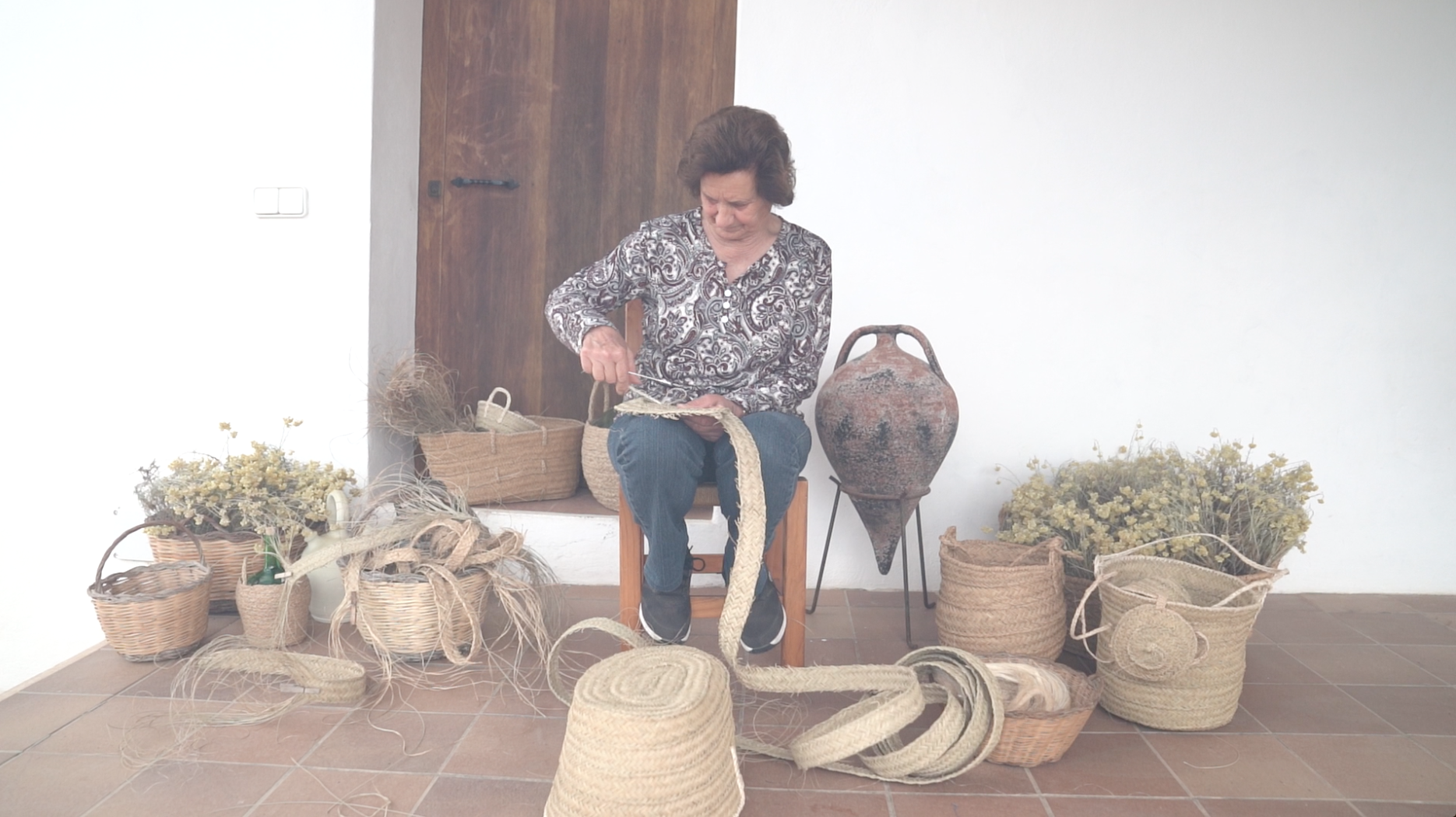
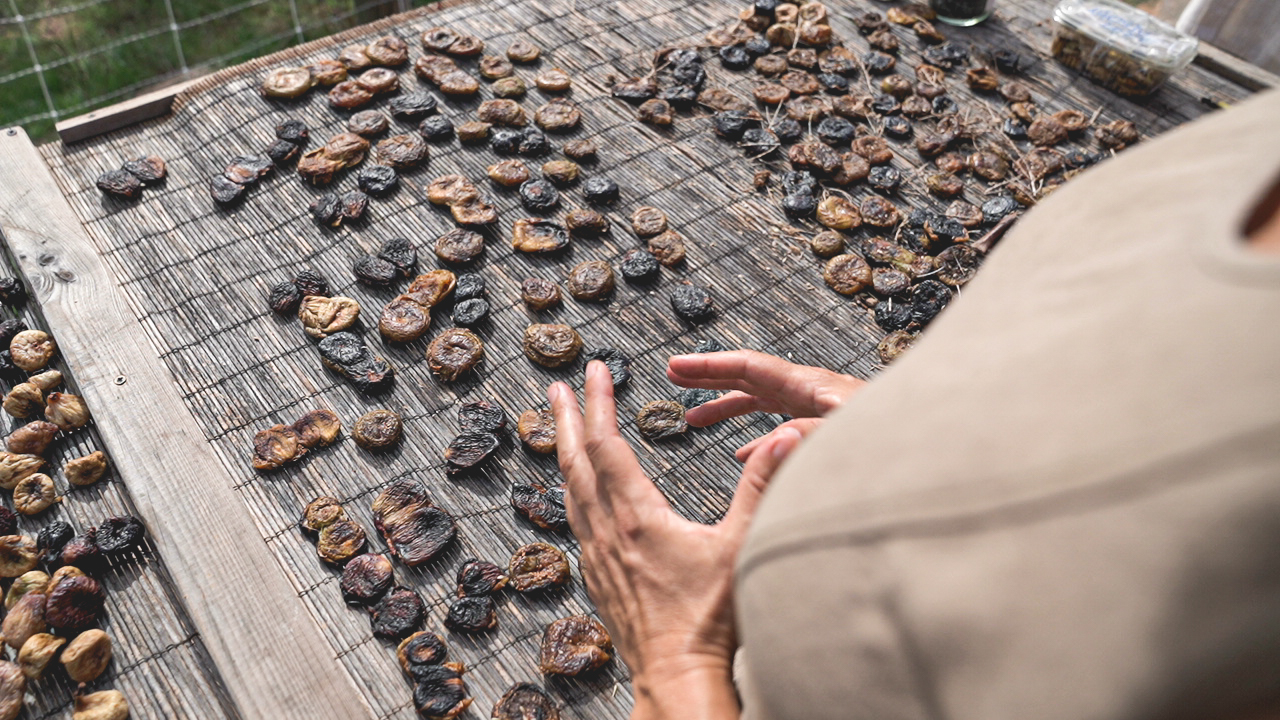
September arrives and Ibiza exhales. The crowds disperse, the noise settles, and something deeply nostalgic rises to the surface: the smell of dried figs from the corner shop, the long-awaited taste of hierbas after dinner, the rough weave of an esparto chair. These are not mere memories. They are the living remnants of a world built by local people, above all, by women who never abandoned their traditions.
“Here in Ibiza, eighty or ninety years ago, there wasn’t much. Barely anything came from the outside. Families lived off what they produced,” says Maria Torres Geraldo from Cana Mañana, in Jesús. “Everything comes from here. Everything comes from the countryside and from the earth.” She says it simply, without nostalgia, as a fact the island seems to have quietly forgotten.
Catalina Tur Marí from Can Llaurador puts it even more sharply: “People are mistaken, because food isn’t pulled out of an office. It comes from the earth. If Ibiza were cut off for twenty days, there would be nothing left in the markets. What would people eat?” It is not a rhetorical question. It is the unvarnished clarity of a life spent in complete self-sufficiency.
This is the knowledge that Harmony Hita Torres of Creatives for the Planet set out to preserve. Together with filmmaker Jorge Pineda Bruges, she created an ethnographic library of twelve short documentary films under the title Tornem a la Terra: intimate portraits of Ibiza’s rural women, filmed where their wisdom lives—in their kitchens, their vegetable gardens, and their fields.
Orelletes, flaó, licor d’herbes, olive oil, dried figs, rosemary, ceramics, esparto, preserves. Recipes and techniques passed down through generations by women who, as Catalina Torres Cardona from Can Mestre recalls, “rarely left the house, had no money to buy things, and had to harvest everything they needed from their own soil.”
What makes this library so urgent is not only what it preserves, but what risks being lost forever. “Many traditions are slipping away because there is hardly any generational handover anymore,” says Laia Ribes from S’ánima in Sant Joan de Labritja, one of a small new generation returning to the land. “Working the soil brings you closer to your own soul.” Marina Cardona Baos from Finca Ecològica Can Puvil in Sant Josep made the same choice: “For me, the hardest part wasn’t becoming a farmer, but making the decision. Once you begin, everything flows.”
To ensure this island memory endures, Creatives for the Planet translated the films into educational workbooks and hosted workshops in public schools across the island, supported by the Consell Insular d’Eivissa and the Balearic government’s agricultural authority. Nearly 1,500 students have taken part, learning the heritage of the countryside to understand a fundamental truth: everything we need to live comes from the earth. “Only through experience can we truly learn,” says Harmony. “And only by knowing our environment can we truly love and protect it.”
In the end, the words of Catalina Tur Marí linger long after: “The vegetable garden is life and death, you are always working, but you always have food on the table.” To truly love this island means to cherish what sustains it: knowing that local consumption lightens our footprint, and that growing our own food nourishes both ourselves and the planet.
Support the project or bring it to your community. If you’d like to collaborate with Tornem a la Terra or bring this educational material to your school or community, please get in touch with Creatives for the Planet. The project is still seeking support to continue expanding this library of essential knowledge for a more self-sufficient lifestyle.
Choosing to buy locally reduces your environmental impact: growing your own food means looking after your health and that of the planet.
https://fortheplanet.global/tornem-a-la-terra/
Thanks to Ibiza Live Report to publish this article.
Text: Sophia Brucklacher