
Silvano Rizzi on the Water Retention Landscape, summarised by Marina Prat in 2021
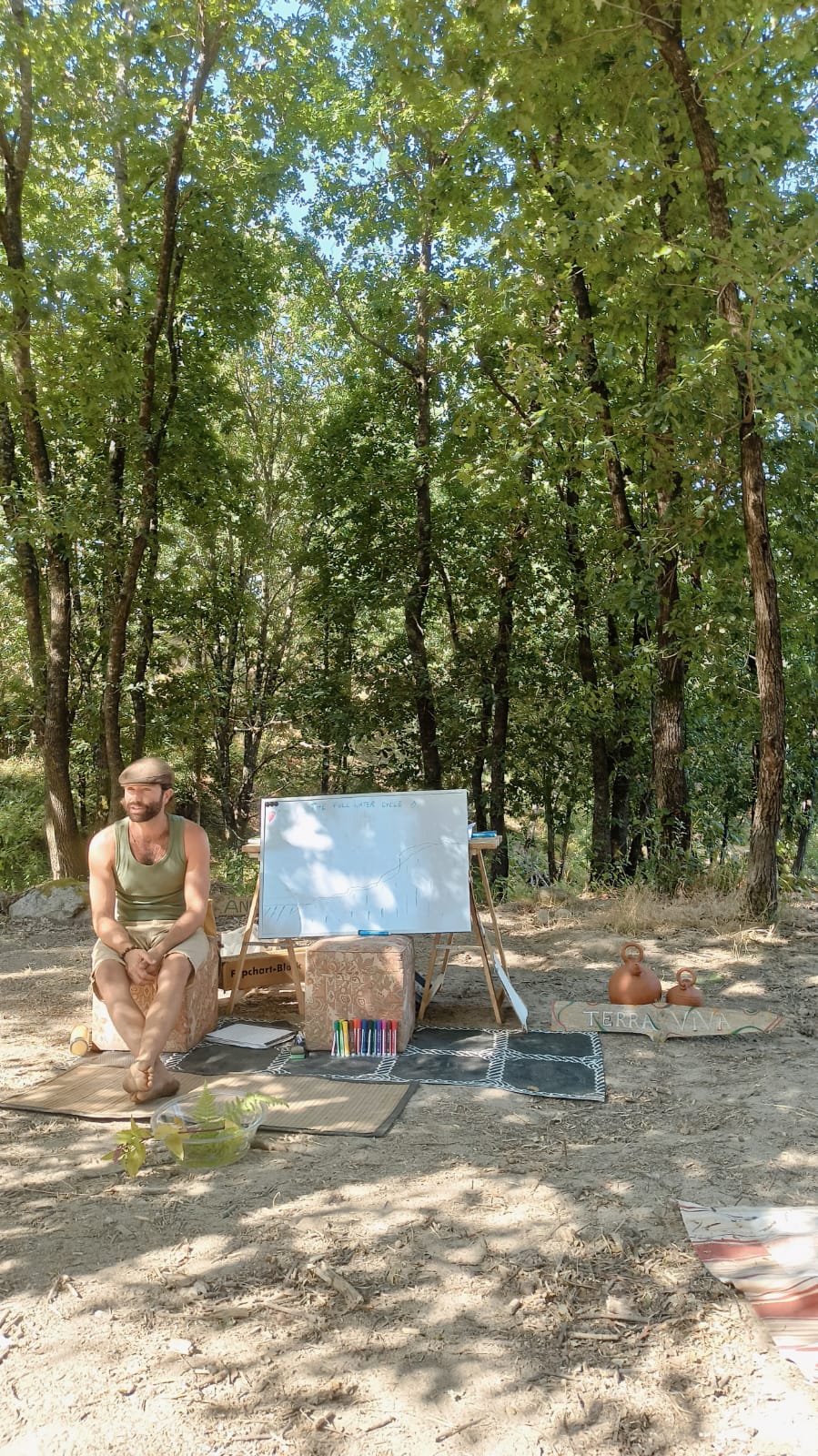
This article was written in 2021 by Marina Prat during her internship with Creatives for the Planet at Terra Viva in Portugal. It summarises the key learnings from the first workshop we held there, led by Silvano Rizzi. At the time, Silvano had been living and working in the Tamera community for eight years and shared his knowledge of the Water Retention Landscape: an approach that restores the water cycle by holding rainwater in the land where it falls. We publish the text as Marina wrote it. Its core idea, to slow the water down, spread it and let it sink, applies just as much to Ibiza.
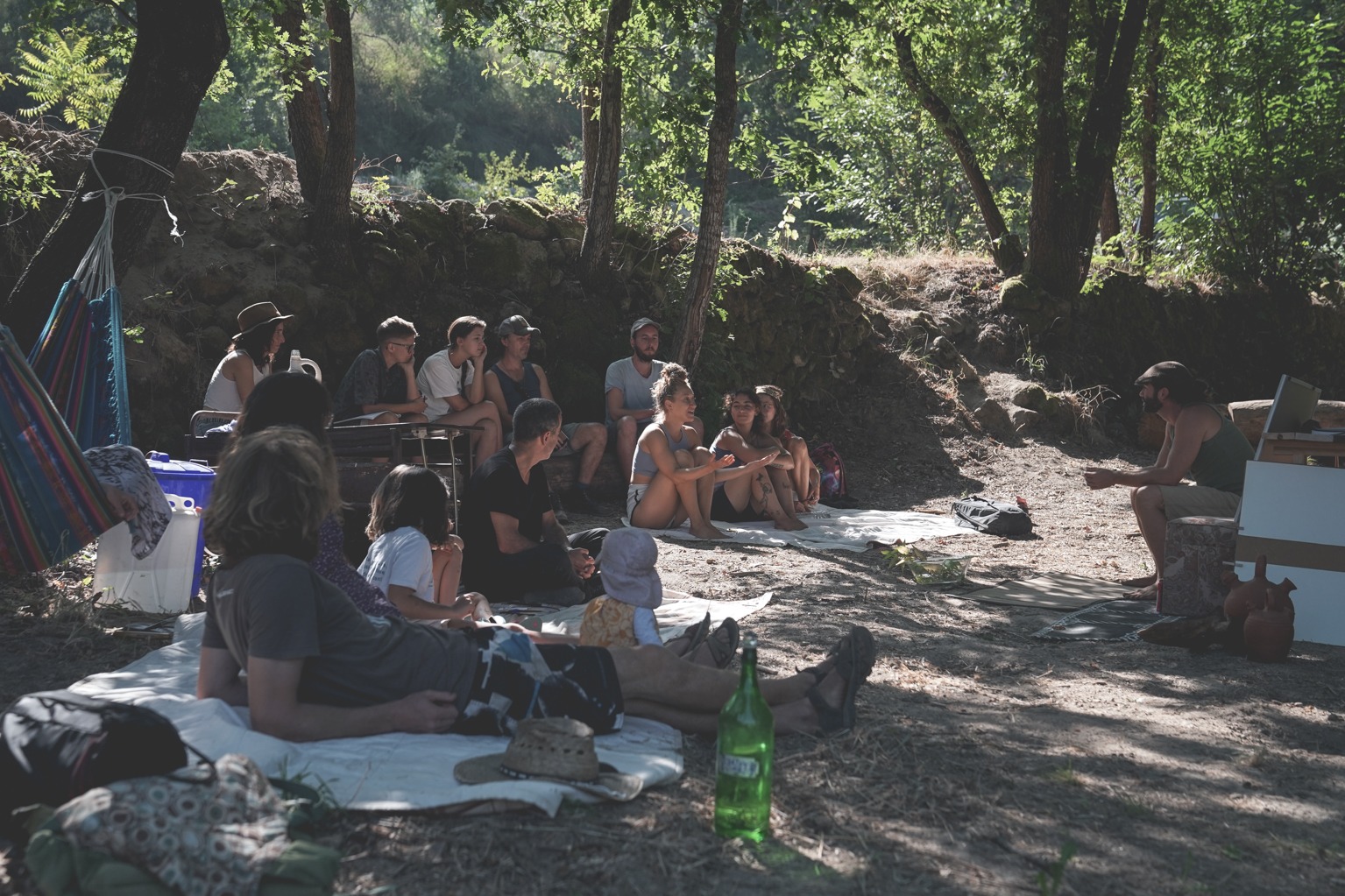
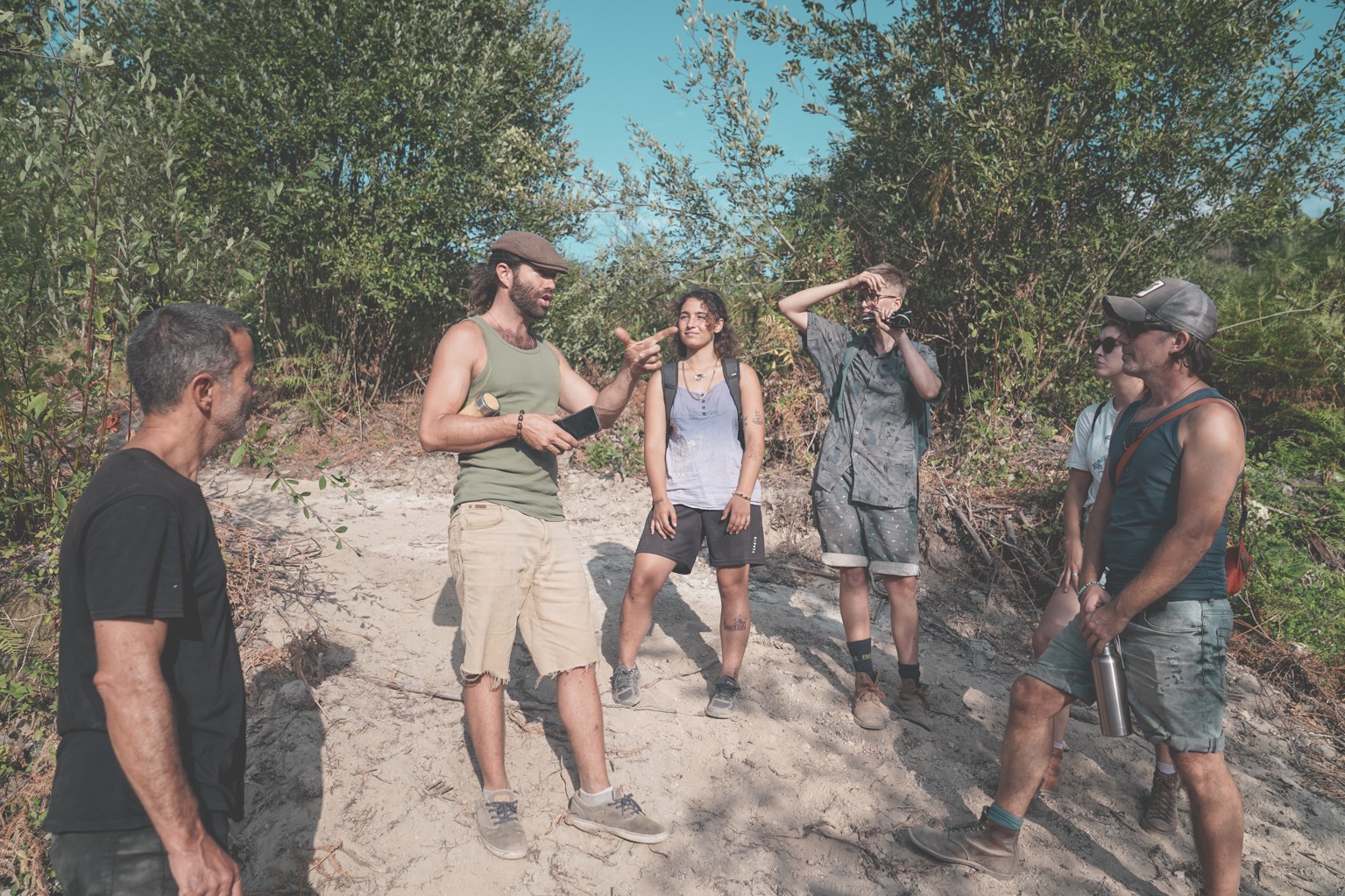
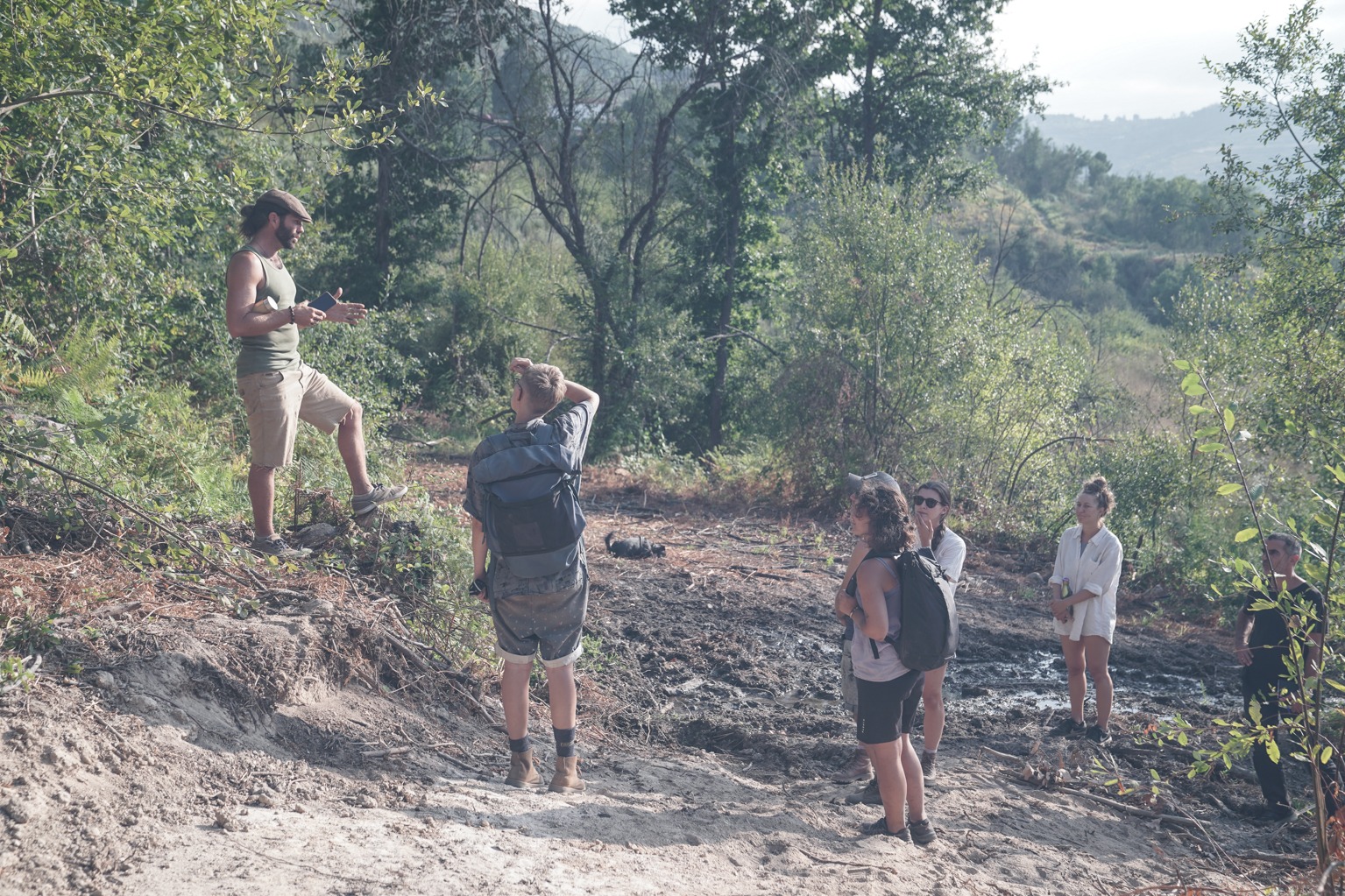
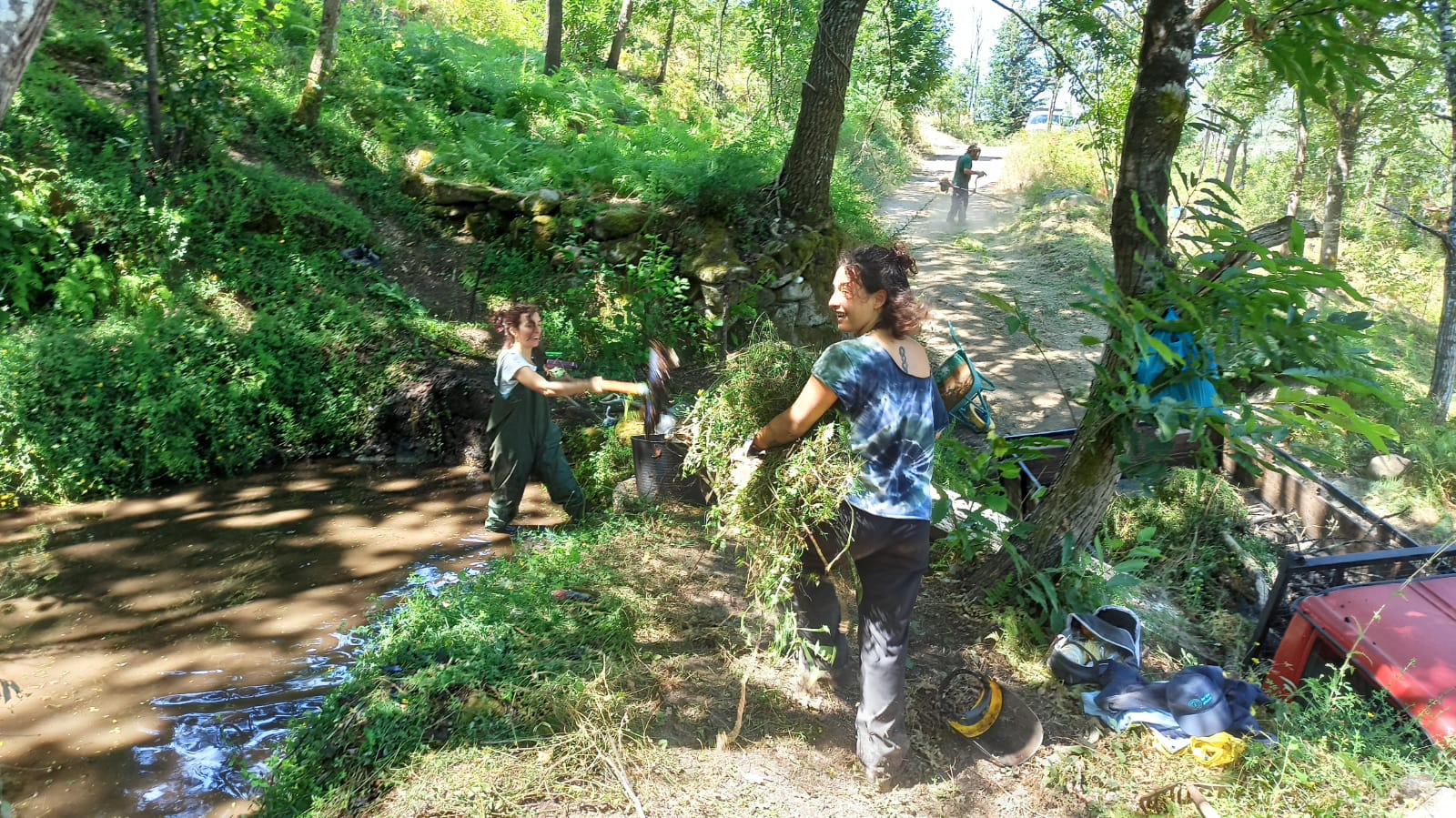
Moving into lands that have been abandoned for several decades often entails having to deal with an important knowledge gap on how to manage the landscape sustainably as it was done in ancient times. Even though starting a new project is a really big challenge, it gives us the opportunity to learn from each other as we move forwards. This first workshop is, in a way, the beginning of Terra Viva’s inspirational centre, where we want to bring in people with different sorts of knowledge to share their experience and inspire others so we can all learn. This short article is a summary of the valuable knowledge about the Water Retention Landscape that Silvano Rizzi, who has been living and working in the Tamera community for eight years, shared in our first workshop.
We are living in really interesting times, where our needs, resources and availabilities are shifting due to climate change. Silvano believes that we should move forth with intentions of restoration rather than adaptation to the climate. Instead of adapting to desertification, deforestation and loss, we should instead change our patterns and beliefs about the landscape. Amongst other factors, climate change is a symptom of an interrupted water cycle. Therefore, understanding how big and small water cycles function in uninterrupted conditions can give us some key hints about managing the water in our landscapes in a way that favours climate restoration and the healing of water cycles.
If we go back to a time where the full water cycle was more or less untouched, we find a landscape filled with vegetation from the coastline inwards. The different layers of vegetation (moss, grasses, bushes, small and canopy trees…) lie on a fertile humus sponge that is full of carbon and microorganisms. Underneath it, quite parallel to the landscape line, we find the aquifer.
The sun begins by heating up our blue planet, evaporating the broad surface of water bodies. Big clouds are formed above the ocean, and when the conditions are right, they start moving inwards, towards the land. At the same time, the vegetation is engaging in a process of evapotranspiration: it absorbs and evaporates soil water as a cooling mechanism. Apart from cooling down the vegetation and its surroundings, evapotranspiration is also a part of the small water cycle that adds water to the clouds over the land. The first rains at the coast are mainly fed by ocean waters, but as the clouds travel inwards, more rainwater comes from the evapotranspiration of the vegetation.
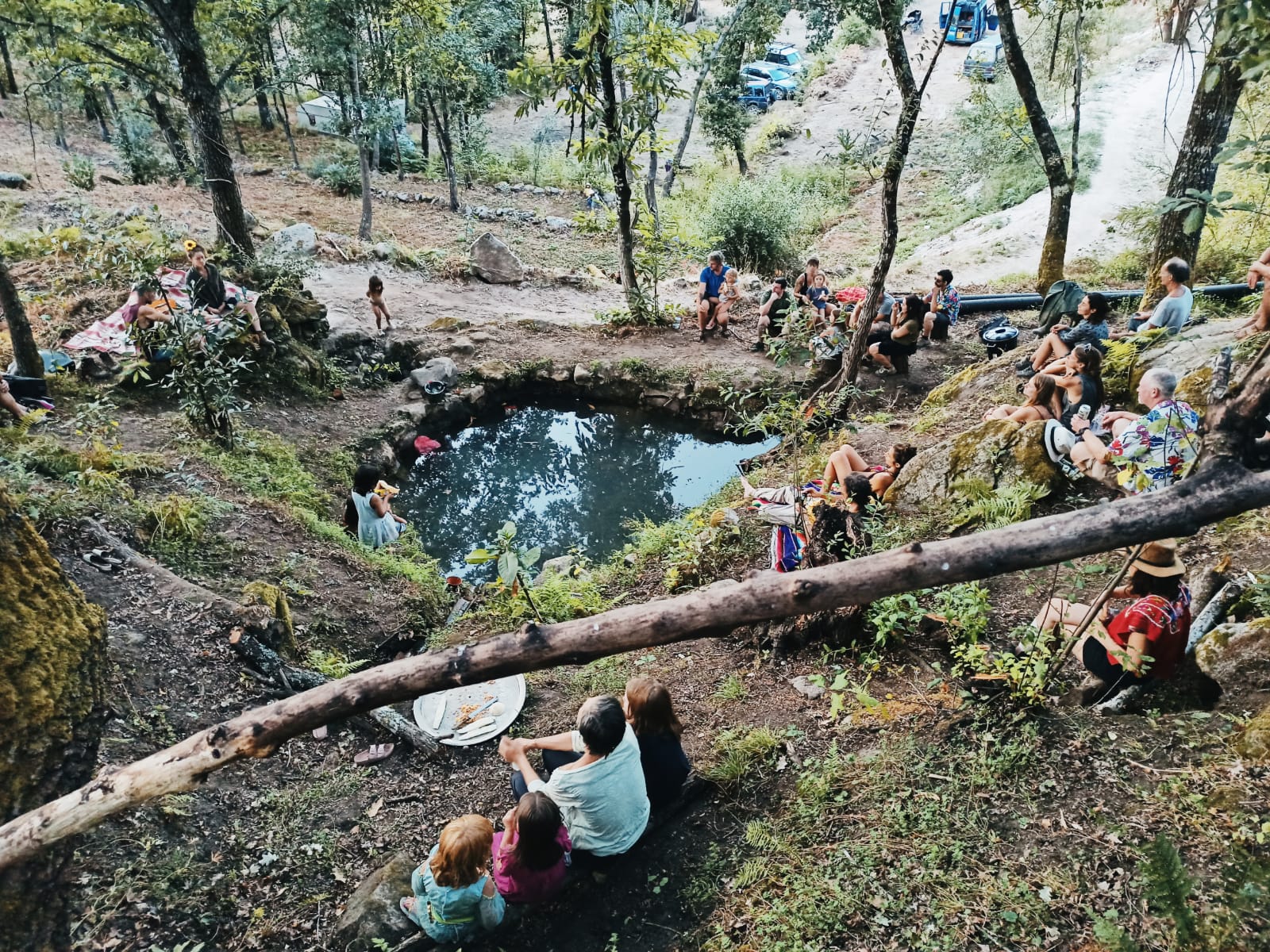
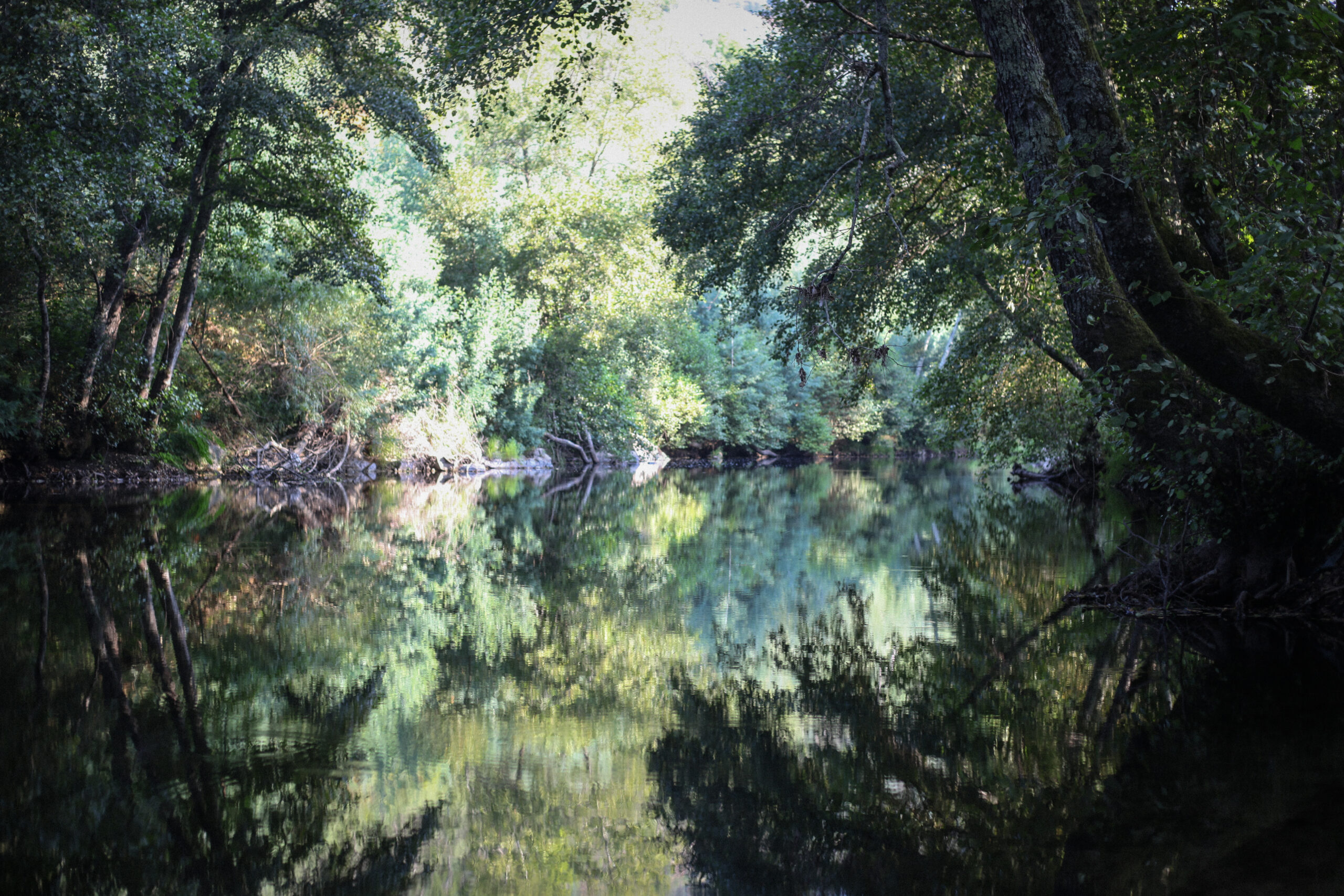
Raindrops do not fall directly onto the earth, but are instead received by the different layers of vegetation. Dripping from the canopy to the moss, the drops are slowed down until they finally lie on the humus sponge. The organisms inside this living sponge might absorb the water, or maybe the vegetation does; our waters are circulating all the time. The sponge keeps absorbing and accumulating waters into its depths, and some of it gets really deep and sinks into the aquifer. Sometimes, when the sponge is too full and the geology allows it, a spring of fresh water pops out. Even though the water from the spring often comes from a quite superficial aquifer, the water that sinks into the earth does so in much deeper levels. It often takes a long time for the water to penetrate the mineral layers; it can take hundreds of years for the deeper aquifers to be refilled. The state of the aquifers can be observed in the fluctuating wells and springs that pop out when there is enough water. It is quite fascinating how springs can pop up in the top of the mountain where there is not too much water retention. This is because of the structure of the sediments, which pressure the water upwards. Springs start in many different levels and their water flows along the landscape lines in small streams. They often flow together and form the river. On a steep landscape the water flows fast and strongly, but once the land is less inclined and slightly softened, rivers tend to meander in a broad surface until they end in the ocean.
Water and geology are the main factors that define our landscape. There is natural erosion by which the landscape naturally changes and becomes more defined. However, it has nothing to do with the levels of erosion produced by human activity on the open soil. When the soil is covered by vegetation, not only is the water impact slower, but it also protects the humus from other erosion factors such as the sun or the wind. Nature rushes to cover the earth, hence the importance of pioneer species such as acacias or eucalyptus, who hurry to fix the open soil. However, their properties are often exploited in monocultures. Events such as droughts and wildfires are something natural in ecosystems, but the frequency in which they are happening in the last years is not; we are living in times of extremes. Usually biodiversity buffers these extremes, and some species even profit from them. But in the last thousands of years, many aspects of the landscape have changed quickly. Not slowly shaped by water or wind, and not always due to extreme events. Human activity on the environment, from timber production to coal mining and monoculture, the rise of cities and industries amongst many other actions, has been drastically changing the landscape. This has a direct impact on the now broken water cycle.
Nowadays, water keeps evaporating from the ocean surface, but when the clouds get to the coastline, instead of drifting towards the land, they are stopped by a heat barrier rising from the cities. The sealed surfaces of the city, its roofs and roads, absorb no water and easily heat up. For the clouds to cross the barrier they need to be quite bigger, so when it does rain, it rains much more. When the rain falls on the bare landscape, instead of it being slowed down and absorbed, it follows gravity and ends up in channels that take it to the river. The shape of the river has changed as well: it does not meander anymore and instead rises due to the water that the landscape has not been able to take in. Rainwater ends up straight in the ocean, eroding the land as it rushes down, and the aquifers do not get refilled as much. Because of this, both humans and vegetation need to dig deeper in order to get drinking water.
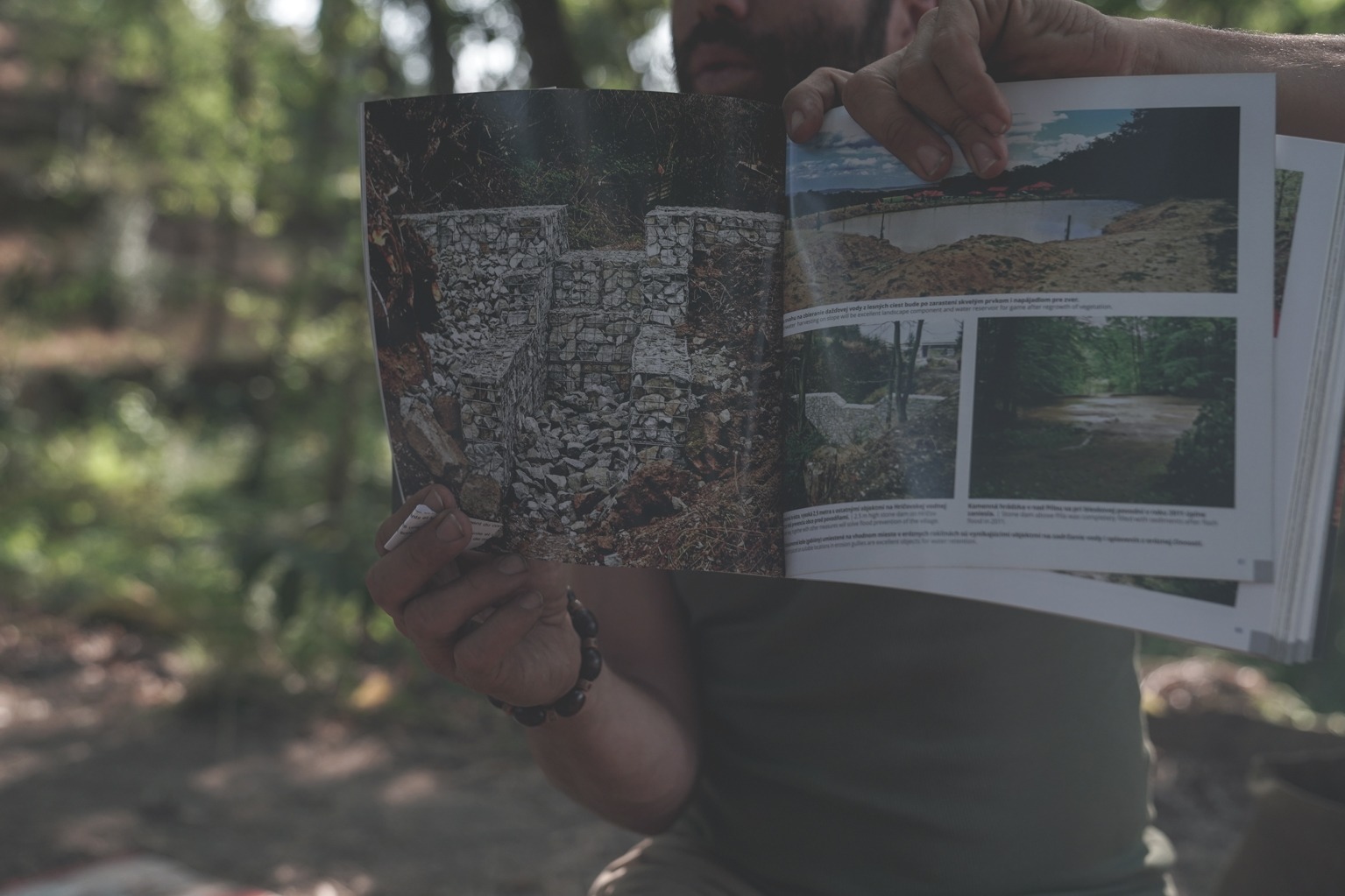
Even though in the last centuries we have caused great damage onto our landscapes, we still have the chance to have a positive impact that helps restore the water cycle. One of the most important principles of the water retention landscapes is that rainwater does not belong to the river. In order to start healing the water cycles, we must start retaining the water where it falls. To the extent in which we can, we should start working from the top of the landscape, where we can retain the rainwater before it erodes down. When we talk about water retention measures, we need to think about the three S: Slow, Spread and Sink. It is important to slow the water before it starts to run. We can support the soil with small actions such as mulching, seeding and reforesting, filling it up with organic matter so that we not only slow down the water hitting the ground, but also enrich the soil composition and encourage biodiversity. When it is required, we can also build systems such as check dams, which stop the water but allow it to leak through, often just by using the materials that are already in our land.
We can start spreading the water quite high up as well. In order to spread it at its highest potential, we need to spread it on contour, following the landscape lines. Some good techniques for that are keyline plowing or ripping. We want to open up the soil that has been compacted so that, on the one hand the roots of the trees can go deeper into the earth and so that on the other hand the water has more time to sink in and infiltrate into the soil. Other water spreading techniques such as lakes and ponds should be used much lower in the landscape and only if it is really necessary; in water management it is really important to work as decentralised as possible. The water that fills up the lakes or the dams is water that is missing in the landscape above.
In our culture, when we see lakes we see the water, we see abundance and safety, but we must remember that water is green too; it is in the vegetation and underneath the earth body, in the aquifers. There is really important work to be done on our conditioned images of nature and observe with honesty what the landscape really needs. We do not know better than nature, and instead of working against it we should support the landscape’s healing process so that it can reach its full potential. When the cycle is full, the water that goes into the earth gives its fruits in one way or another, because when there is abundance of water in the land, the aquifers, springs and creeks are constantly being refilled; there is water everywhere if we take just what we need.
Text: Marina Prat
Creatives for the Planet internship, July to November 2021, Terra Viva, Portugal