

Ibiza has one of the strictest plastic laws in Europe. Since 2023, organisers of large events are legally required to offer alternatives to single-use plastic cups, either by opting for reusable cups or single-use cups made from other materials. The reality is that at most large events on the island, disposable cups still predominate – made of paper or bioplastic. The material changes. The impact stays the same.
It is a mistake to assume that changing the material alone can be a solution. A bioplastic or cardboard cup that ends up in the bushes after a festival doesn’t solve a problem – it relocates it. What matters is not what a cup is made of, but how many times it is used and what happens to it. And that depends less on the material than on the system behind it.
The numbers are clear: a reusable cup, used across its lifetime – approximately 300 uses – generates up to 60 times less CO₂ than the same number of disposable cups and produces 68 times less waste. This is due to the entire chain: production, transport and waste management. But the environmental benefit doesn’t happen at the point of purchase. It happens at the point of return. A deposit system creates exactly that: not sacrifice, but accountability. Give someone a cup for free and they’ll throw it away. Give them a cup with a deposit on it and they’ll bring it back.
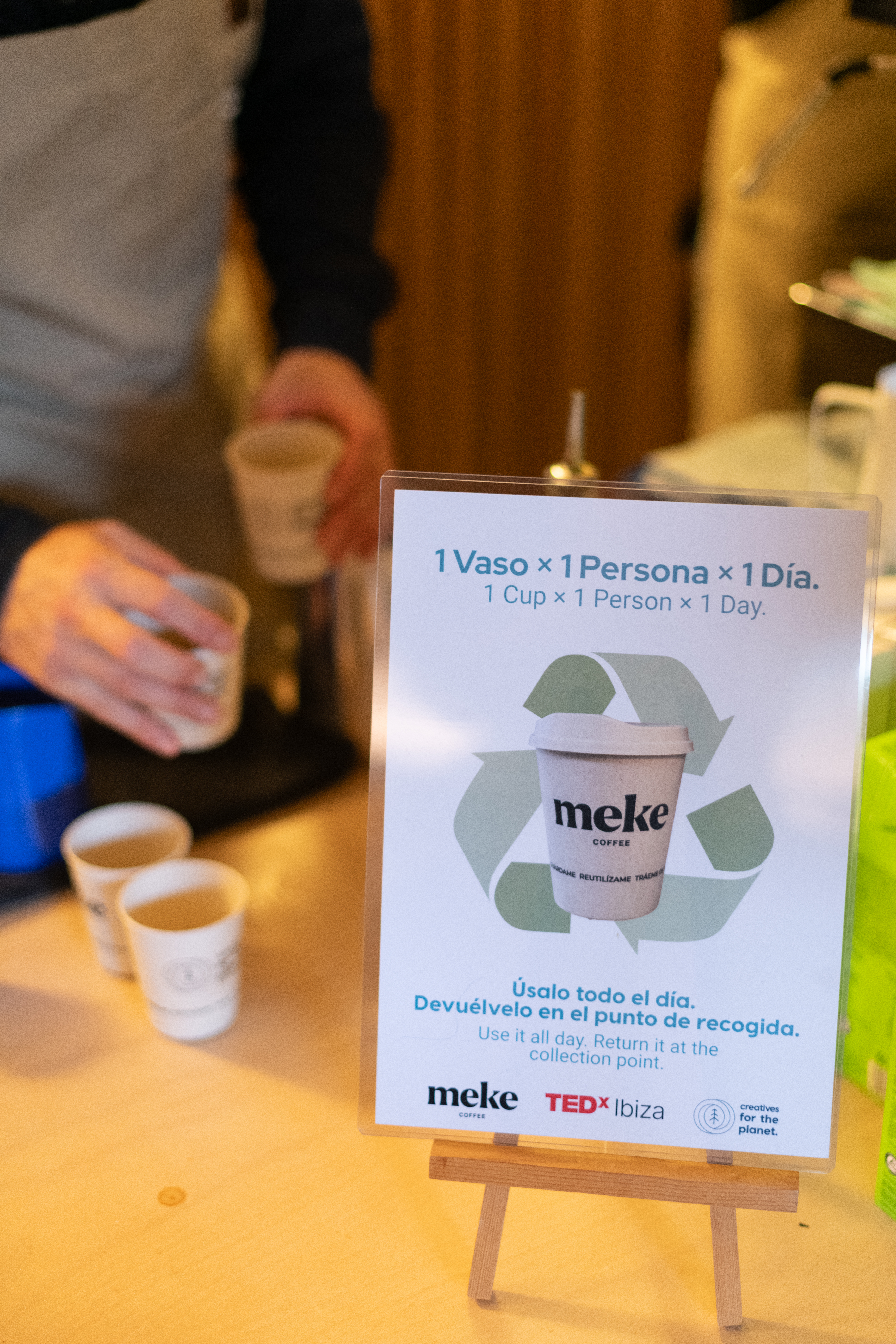
Creatives for the Planet has been working with this model for years – long before it became law. Starting with the Zoo Project parties at Benimussa Park and the Atzaro spring celebrations, through TEDx Ibiza with Café Meke, to Fantasia Festival and the Ray of Light Awards 2026. The Circular Cup travels from event to event, gets washed, stored and used again. Several municipalities on Ibiza have also implemented this system – a sign that the model works and scales.
What it takes is organisers willing to build the system properly: information points, return points, deposits, infrastructure. Because the environmental credentials of a reusable cup are not a promise fulfilled at purchase – they are earned through time, management and actual use.
As Rezero, part of the Alianza Residuo Cero, puts it: “A cup is not reusable because it is thicker or carries a sustainability message. It is reusable if it is returned, washed and put back into circulation.” The Alliance is calling on the government to ensure that the upcoming European regulation obliges event organisers not only to offer reusable cups, but to guarantee real return and washing systems. A cup that is not returned is not truly reusable – it doesn’t get washed, reused or refilled. It ends up in the bin or abandoned somewhere, and because it is more durable than a disposable cup, the environmental problem is greater: it takes many more years to decompose. In Germany, reusable cups with deposit systems at festivals have been common practice for years – with dedicated washing centres, logistics providers and digital return infrastructure. No pilot project, no statement: just normal. But the fact that even in the Netherlands, where reusable cups have been legally mandated since 2024, only one in four festivals complies, shows how wide the gap between law and lived practice can be. The real obstacle is not logistics. It is the missing will to apply a system that already works. On Ibiza, only a few are doing it well – and we are not stopping until it is simply normal here too.
Texto: Sophia Brucklacher
Imagenes: Jorge Pineda Bruges
Thanks to Ibiza Live Report for publishing this article in their August edition.
Fuente:
https://www.residuosprofesional.com/vacio-legal-vasos-reutilizables-festivales/
https://upstreamsolutions.org/blog/eliminating-single-use-cups-at-events