
Discovering Kio on the Galaxie as a model for experiential environmental education
Environmental education faces a fundamental challenge: how can awareness become responsibility, and knowledge become relationship?
The project “Discovering Kio on the Galaxie” was created as a response to that question.
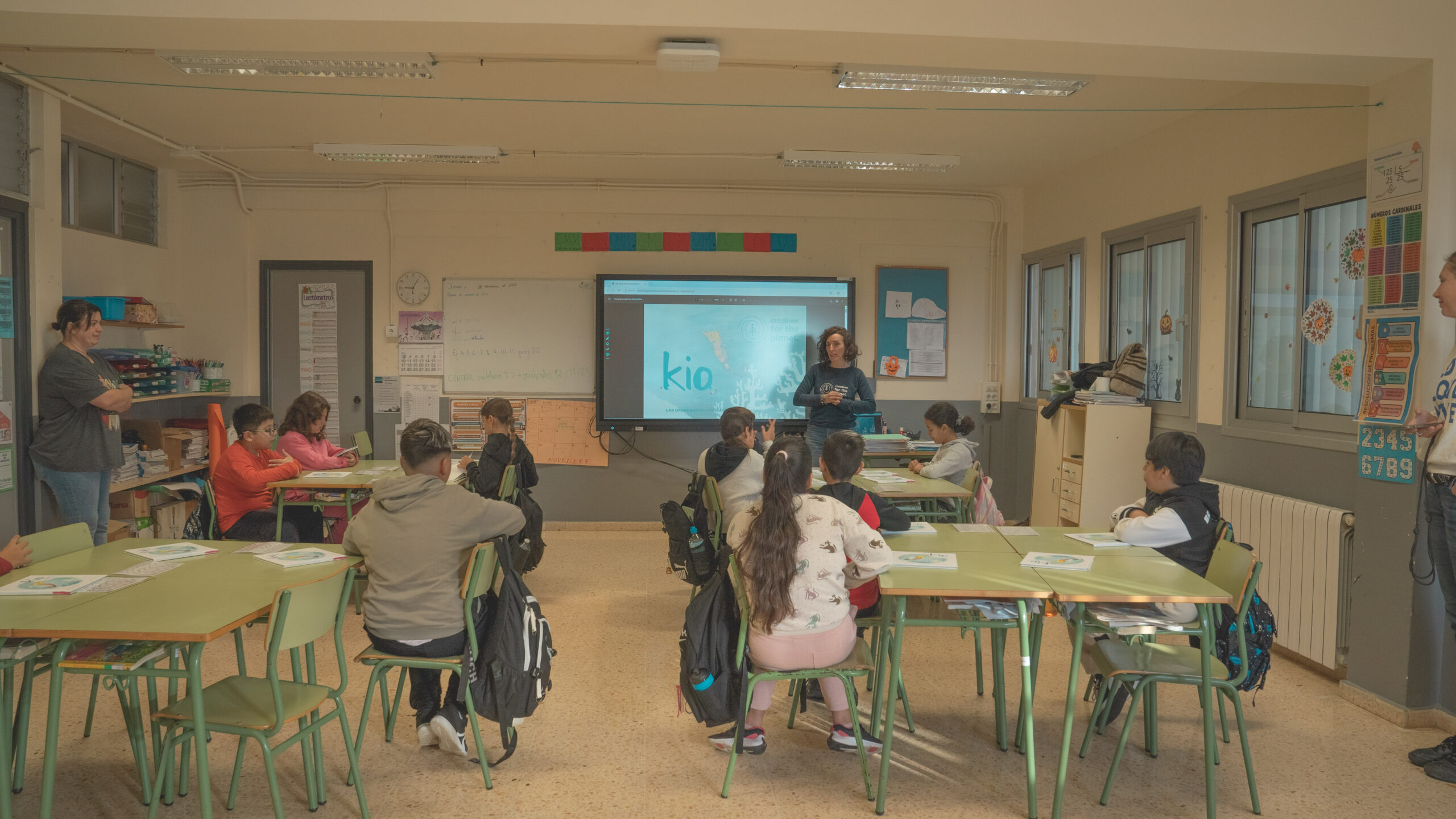
During the past trimester, 67 students from CEIP Balansat, CEIP Buscastell, CEIP Santa Agnès and CEIP Poeta Villangómez took part in a four-phase educational journey that intentionally connected narrative, reflection, action and direct experience in the natural environment. The strength of the project lies not only in each individual activity, but in the coherence of its sequence.
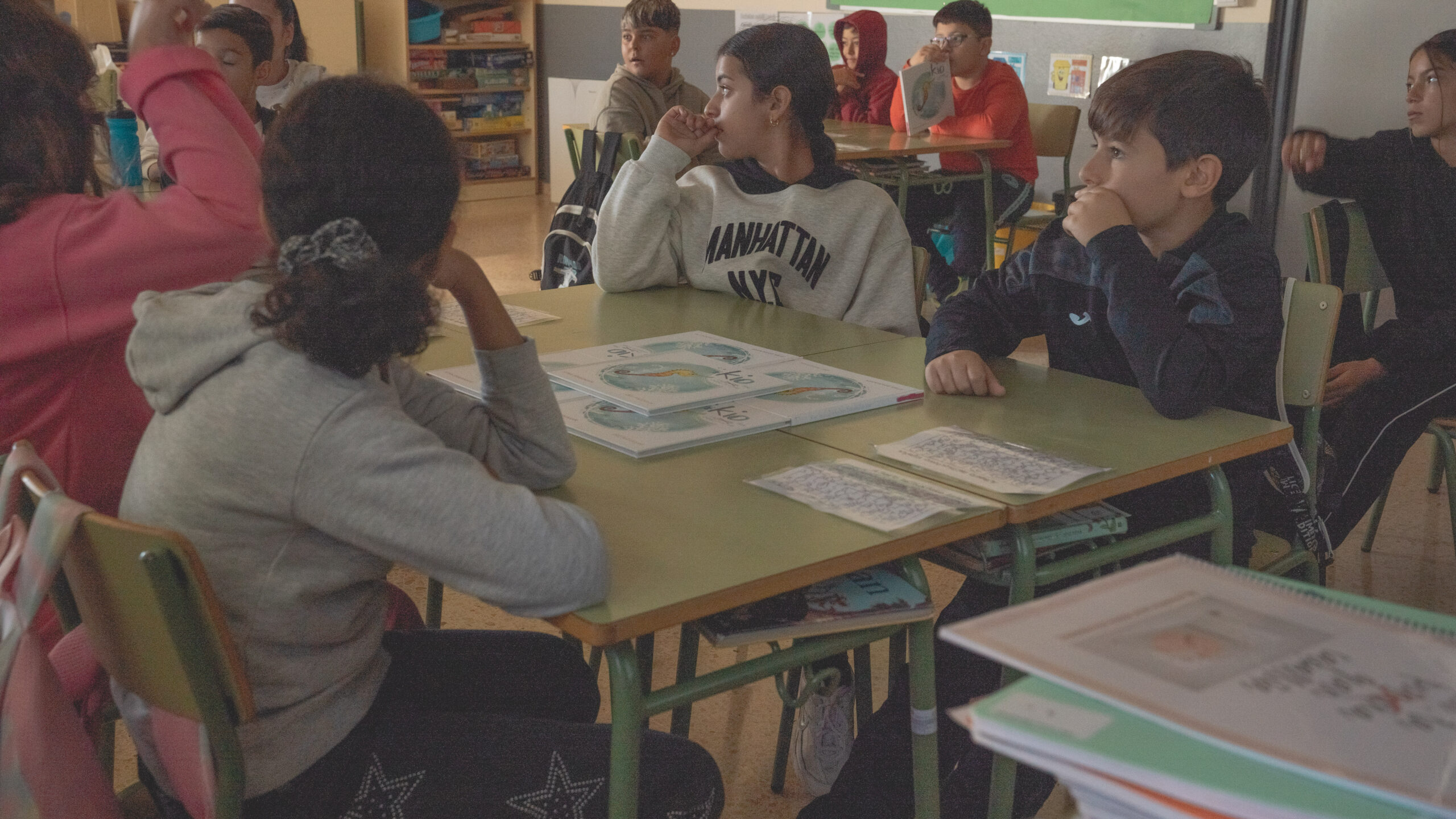
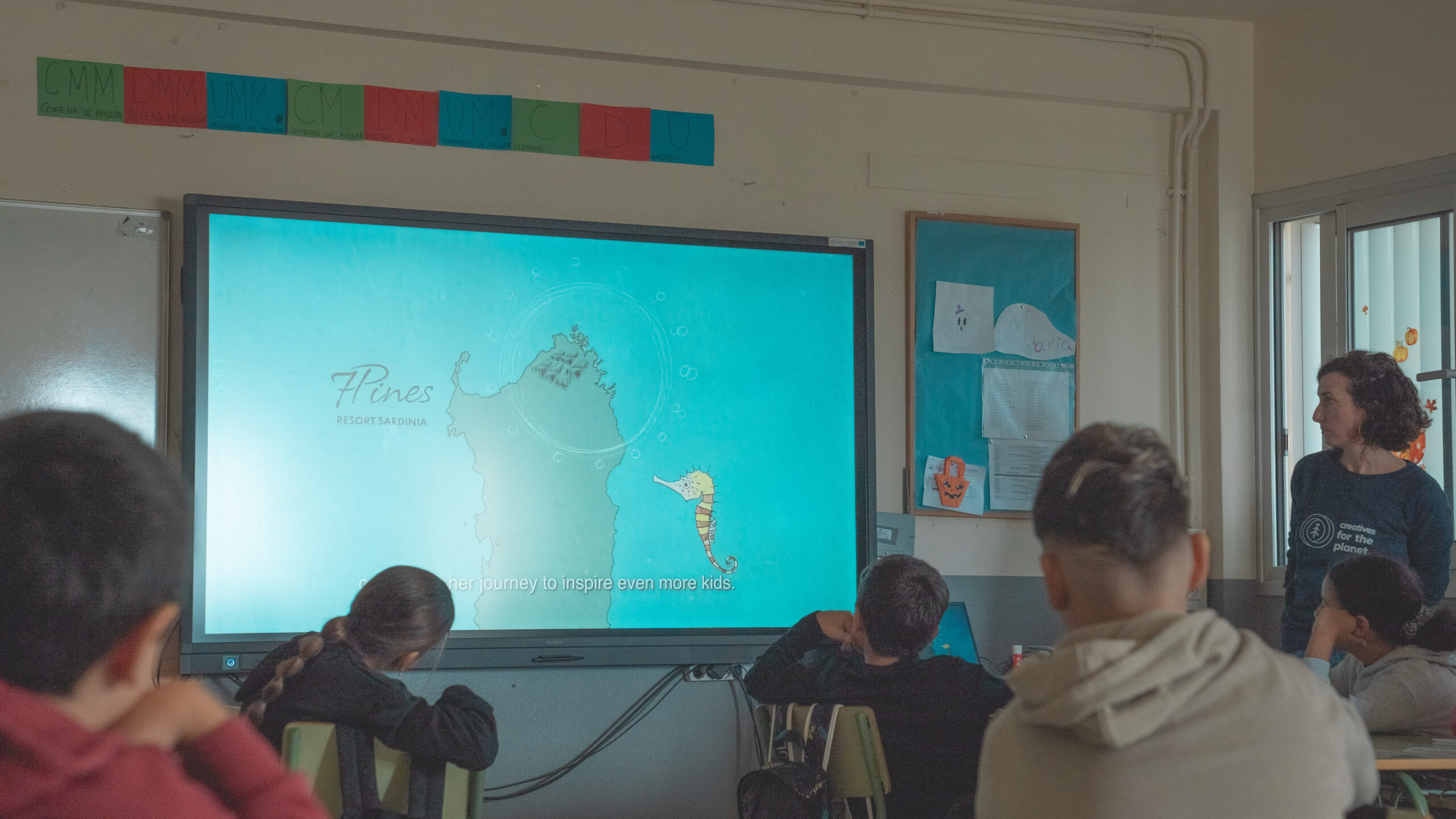
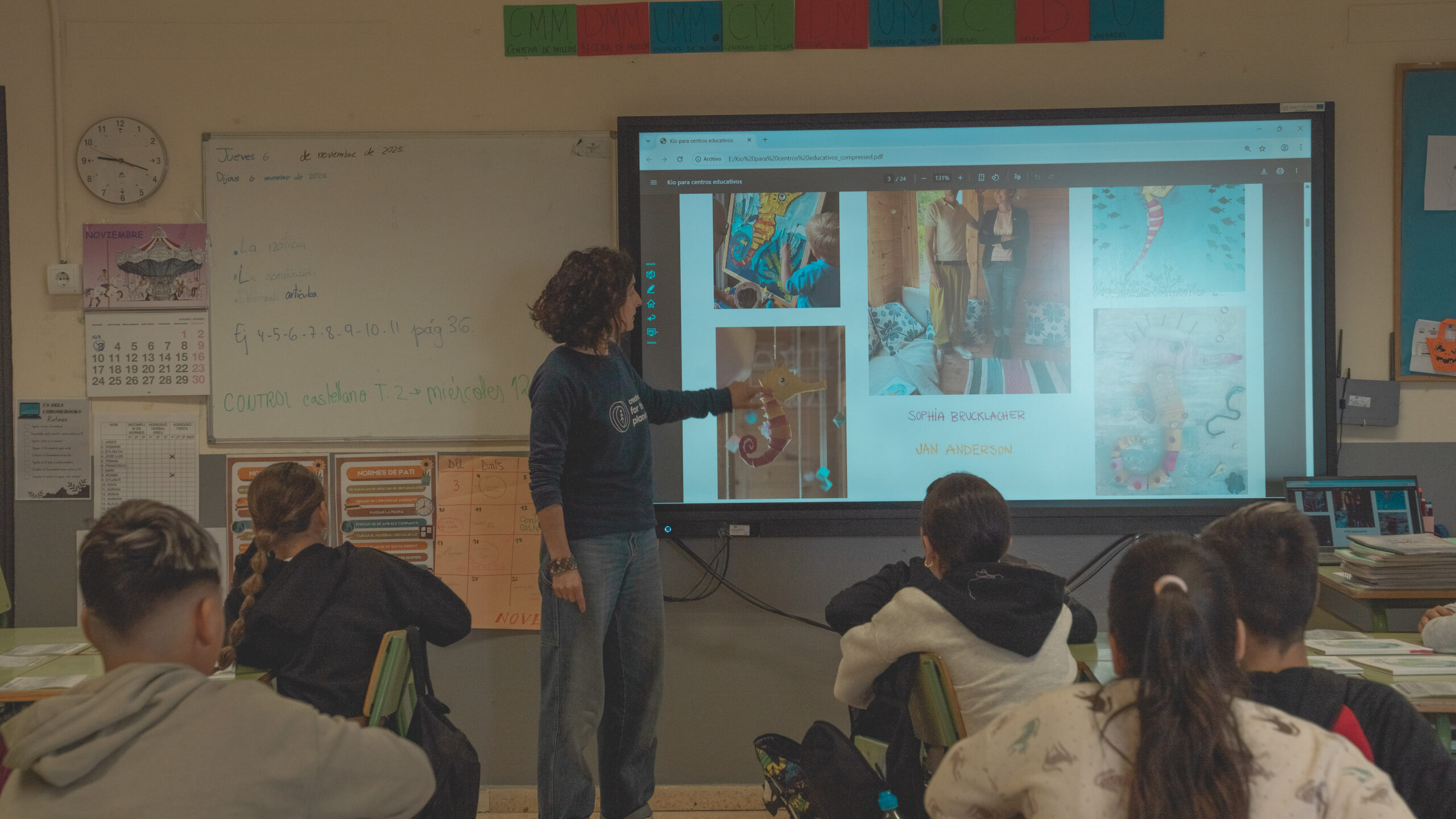
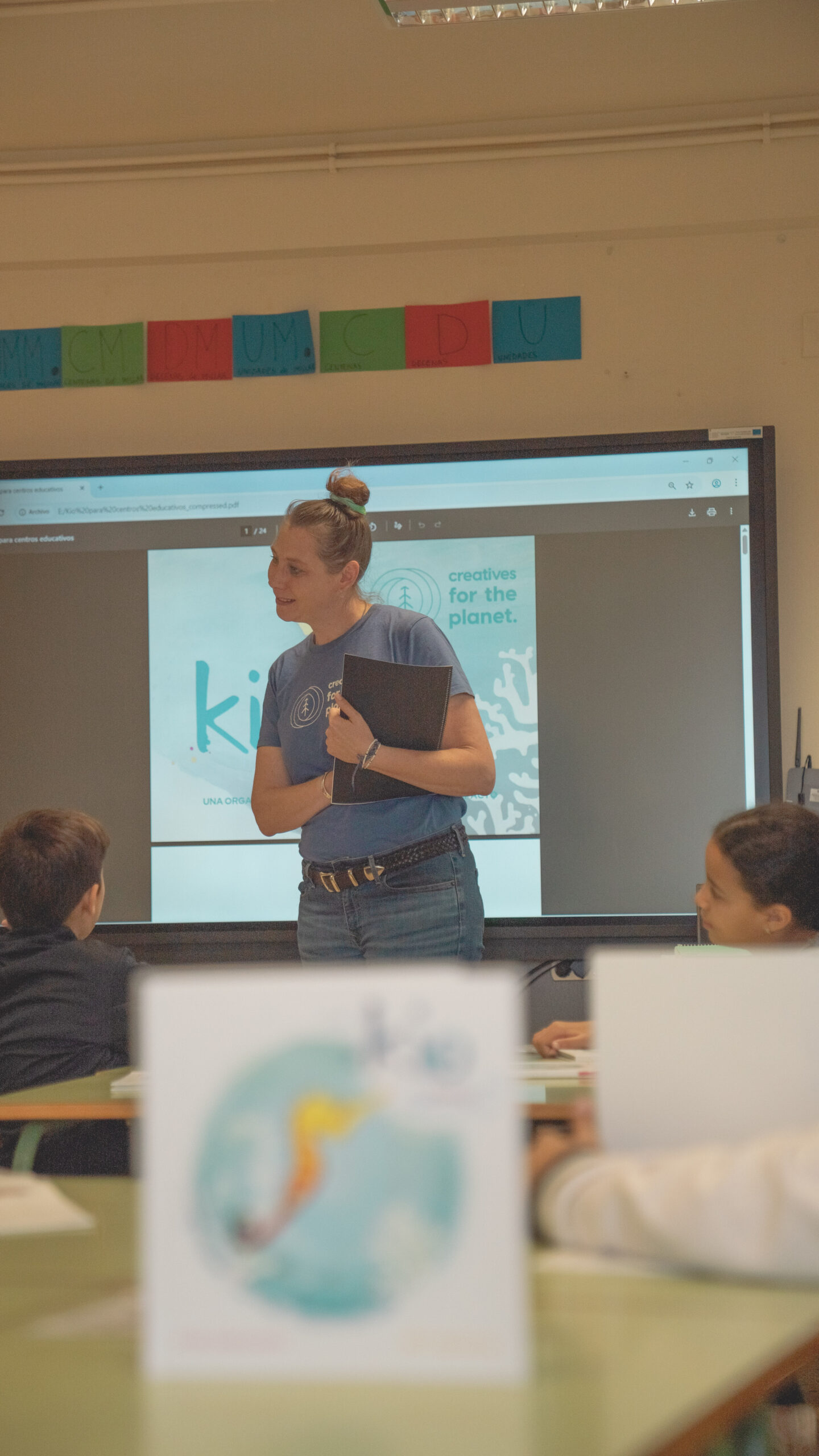
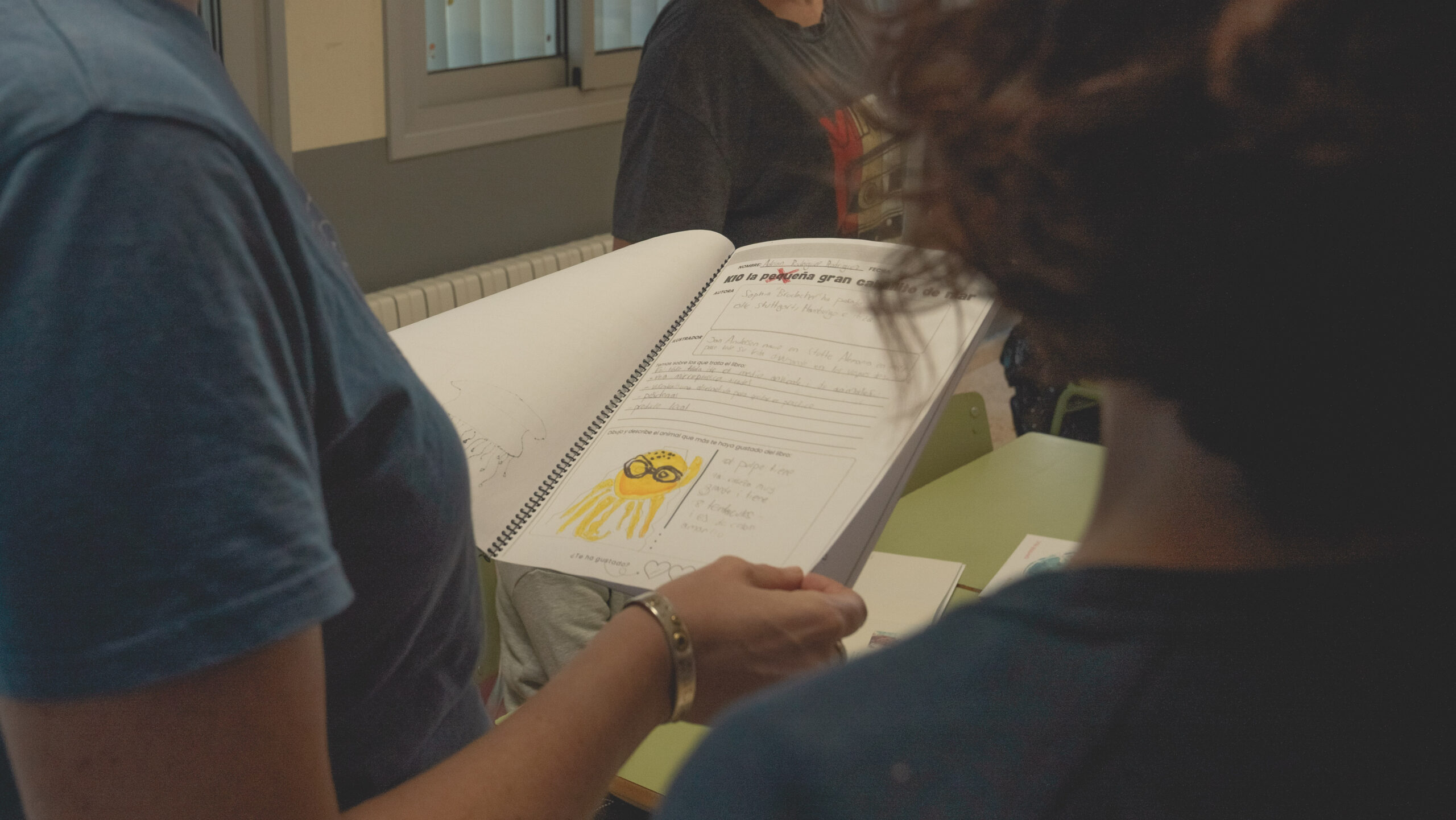
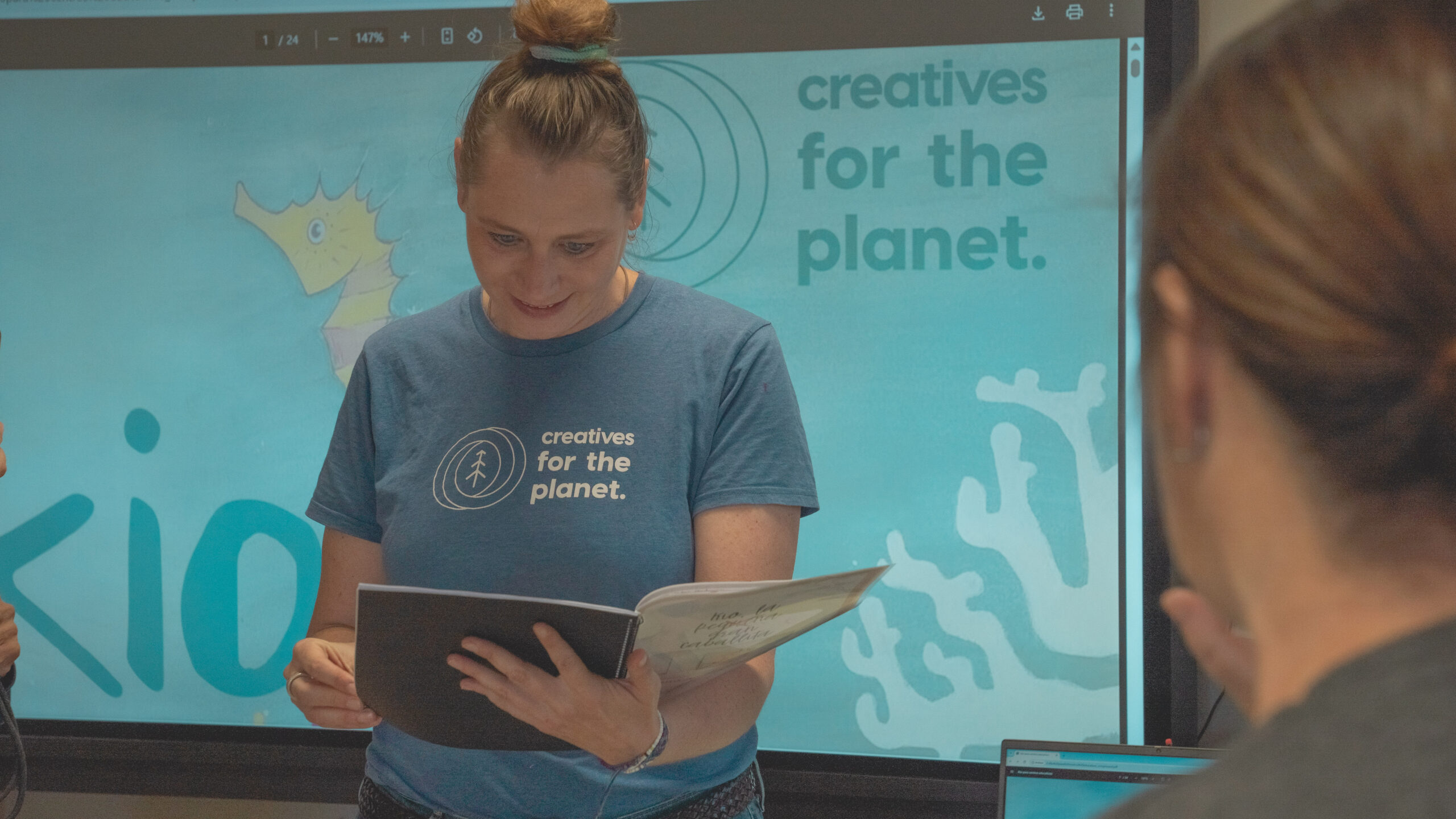
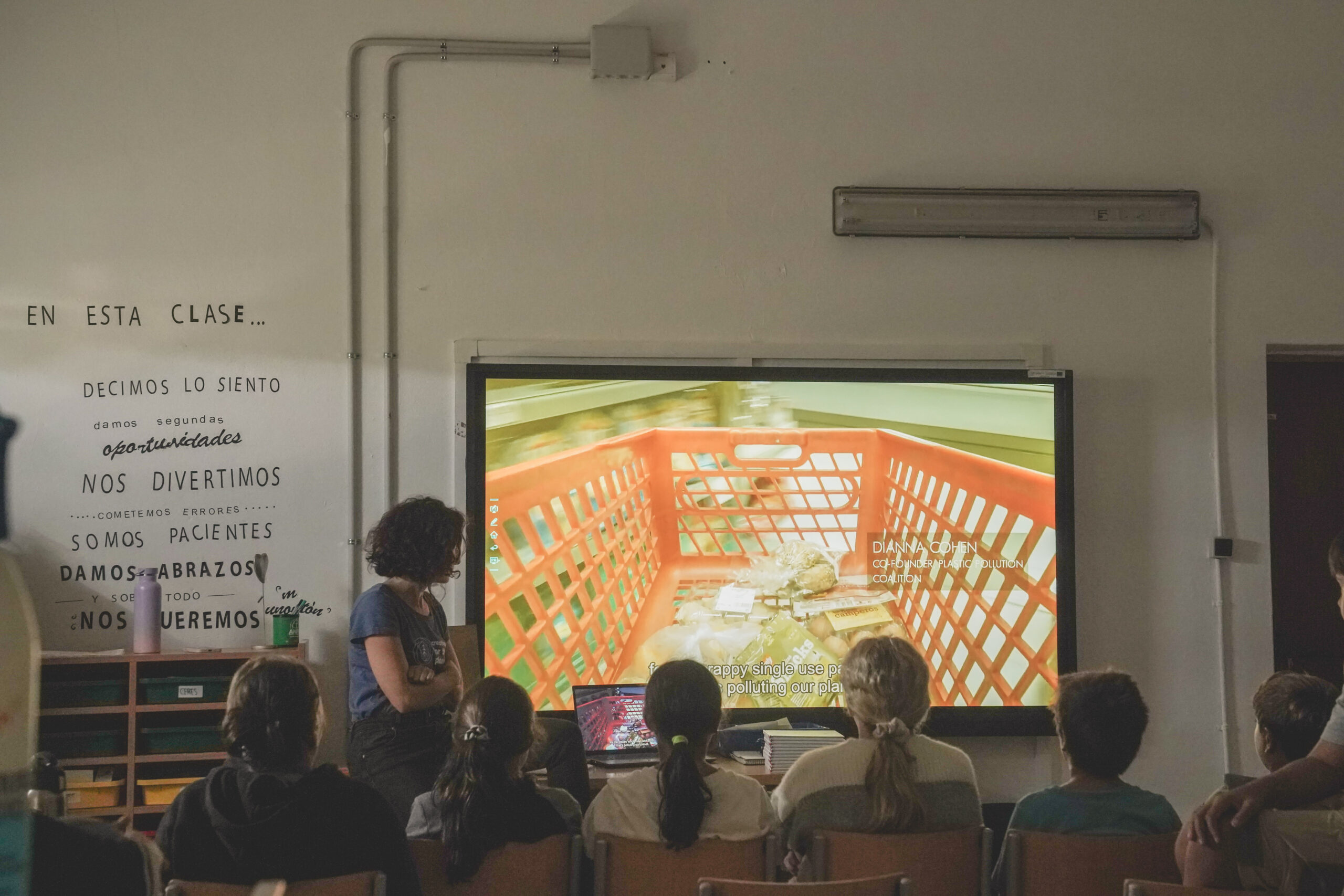
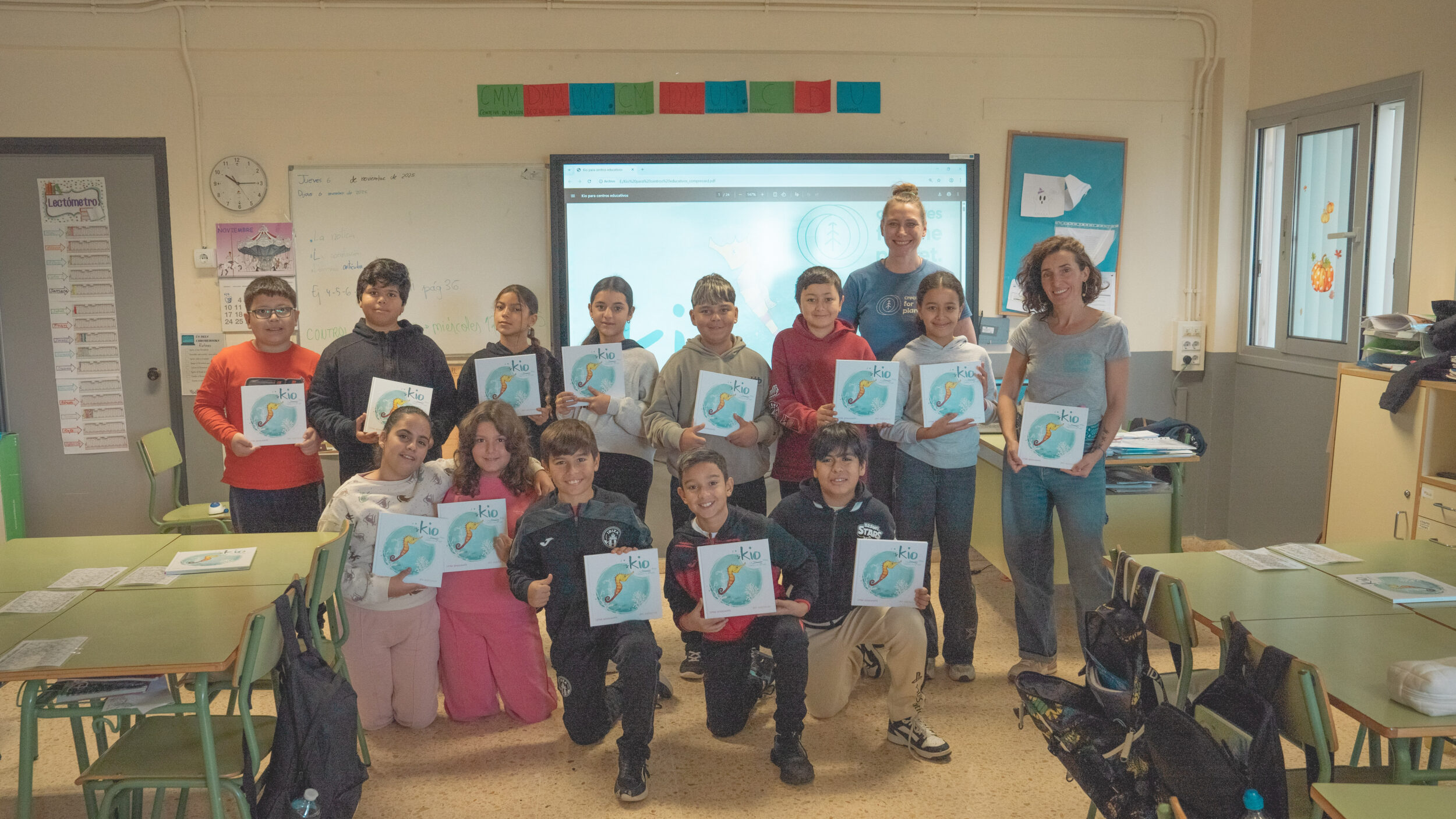
Everything began in the classroom with the reading of Kio, the Little Big Seahorse. The book was not approached as simple fiction, but as a gateway to ecological understanding. In workshops guided by Harmony Hita Torres, students explored the emotional universe of the characters while discovering the real marine species and ecosystems behind them. The seahorse, the octopus and the Posidonia seagrass meadows ceased to be narrative elements and became part of the coastline that surrounds them.
“The story opens the door,” Harmony explains, “but what truly matters is what happens afterwards. When children understand that the animals in the book live in their own waters, the distance disappears. The ocean is no longer abstract.”
This movement from imagination to proximity is essential. Environmental challenges can often feel distant or overwhelming. By anchoring scientific learning in narrative empathy, the project creates a bridge between emotion and ecological literacy.
From there, learning moved into action.
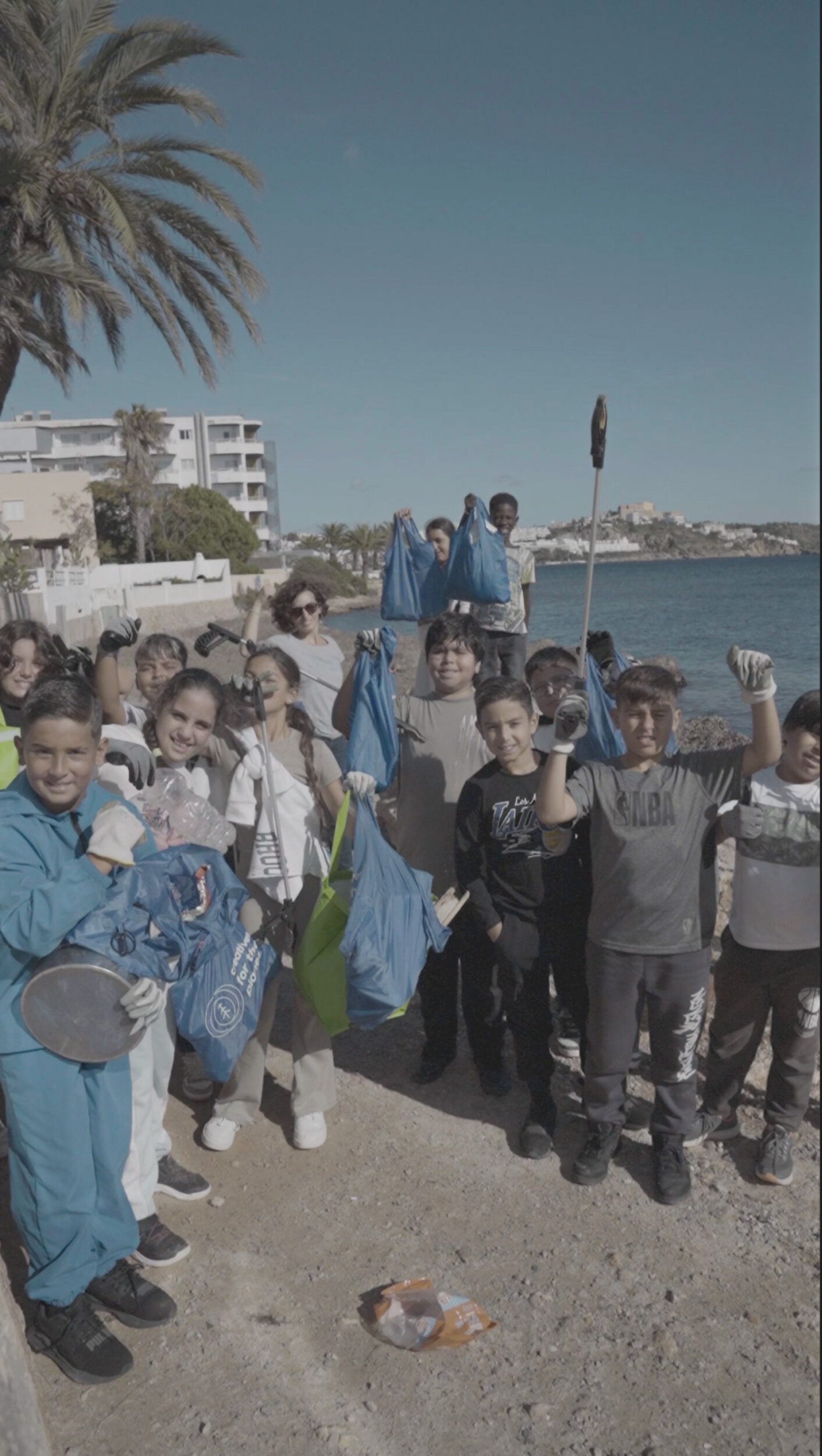
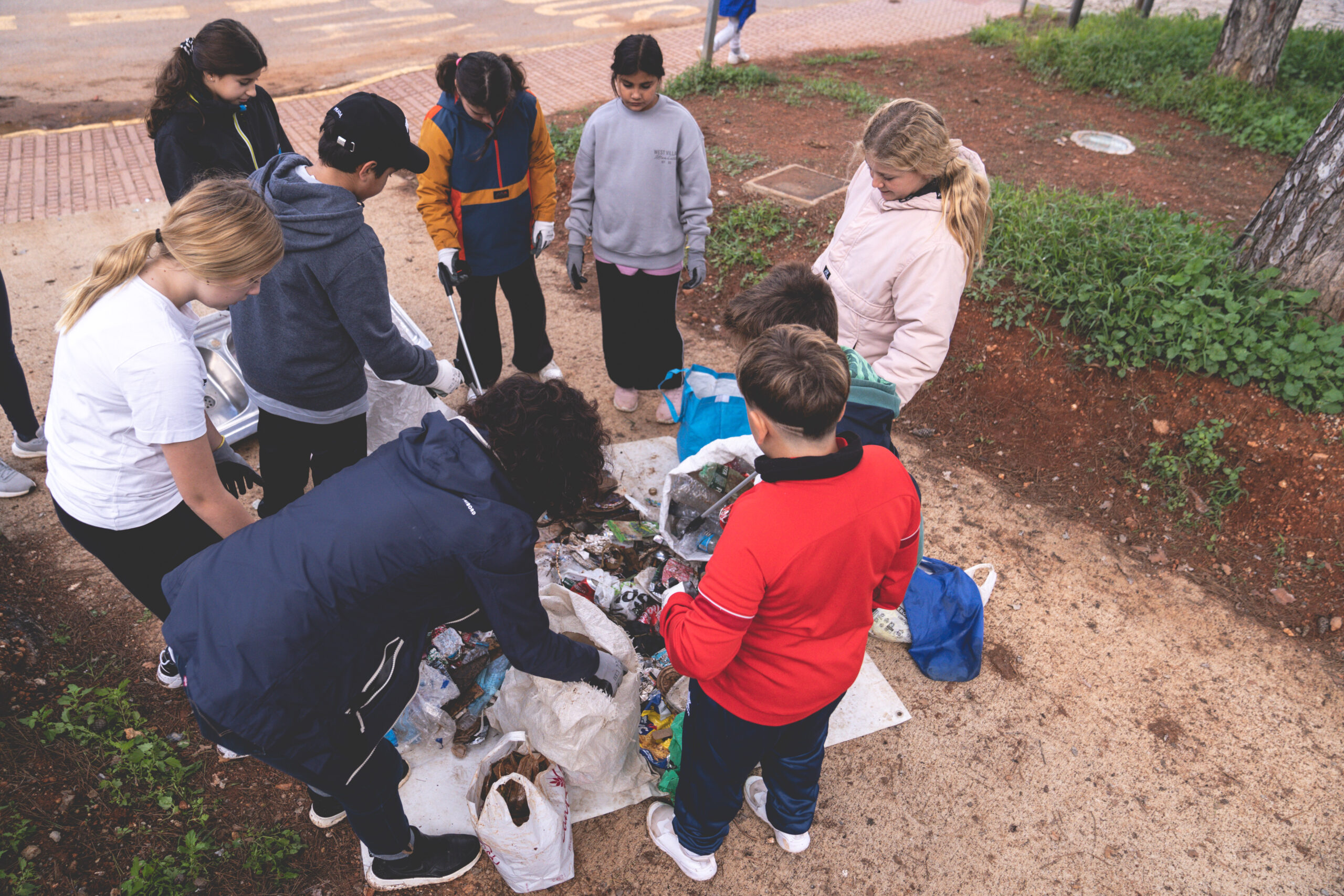
Each participating school organized its own beach cleanup, coordinated by Jorge Pineda Bruges. Together, the students removed 80 kilograms of waste from Ibiza’s coastline. What had been discussed in the classroom gained weight and form. Pollution was no longer a concept, but a tangible reality.
“For many students, this is the moment when understanding becomes personal,” Jorge reflects. “But it is equally important that they see solutions. When they later board a zero-emission electric sailboat, they realize that sustainability is not only about limitation, but also about innovation.”
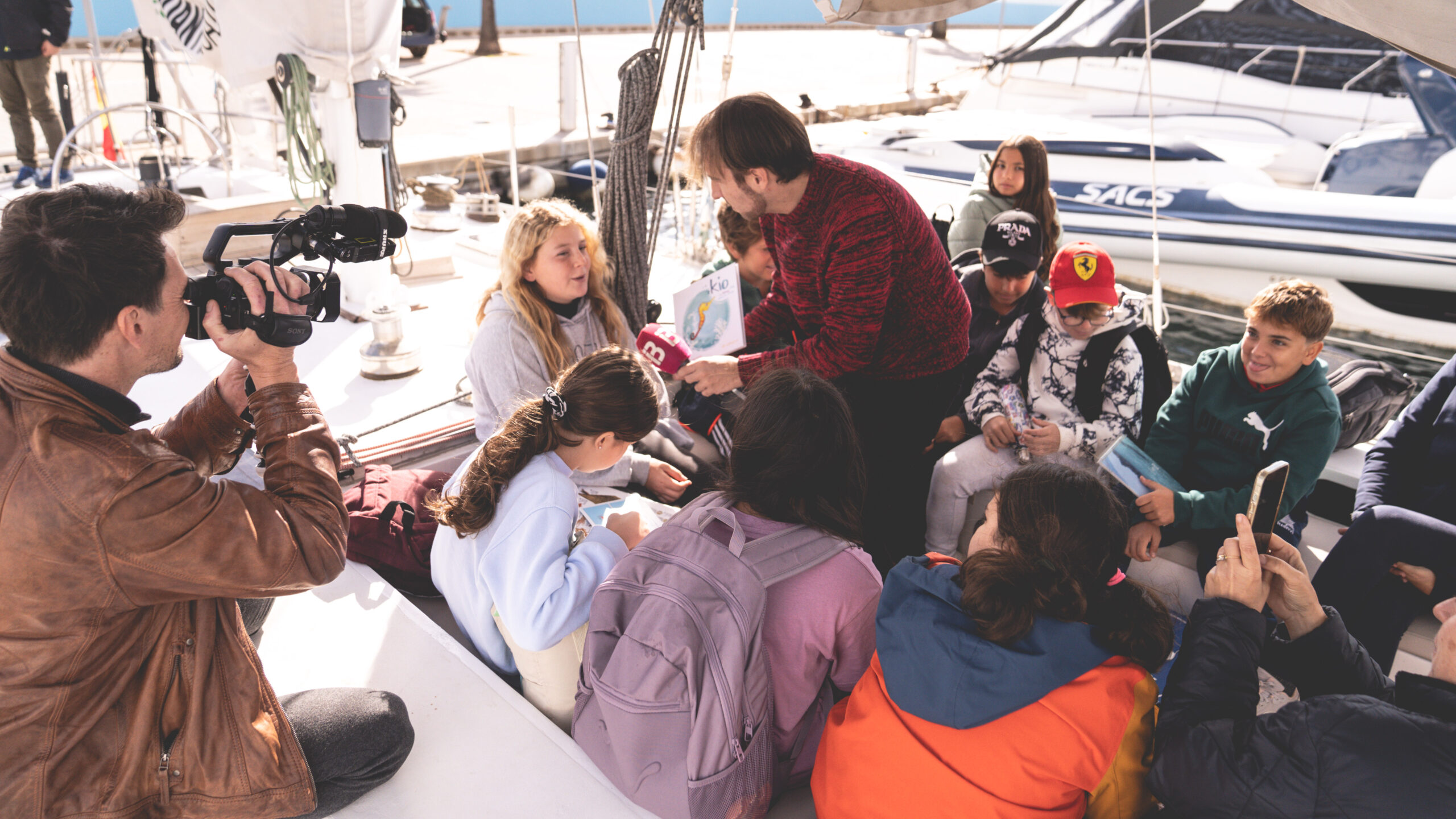
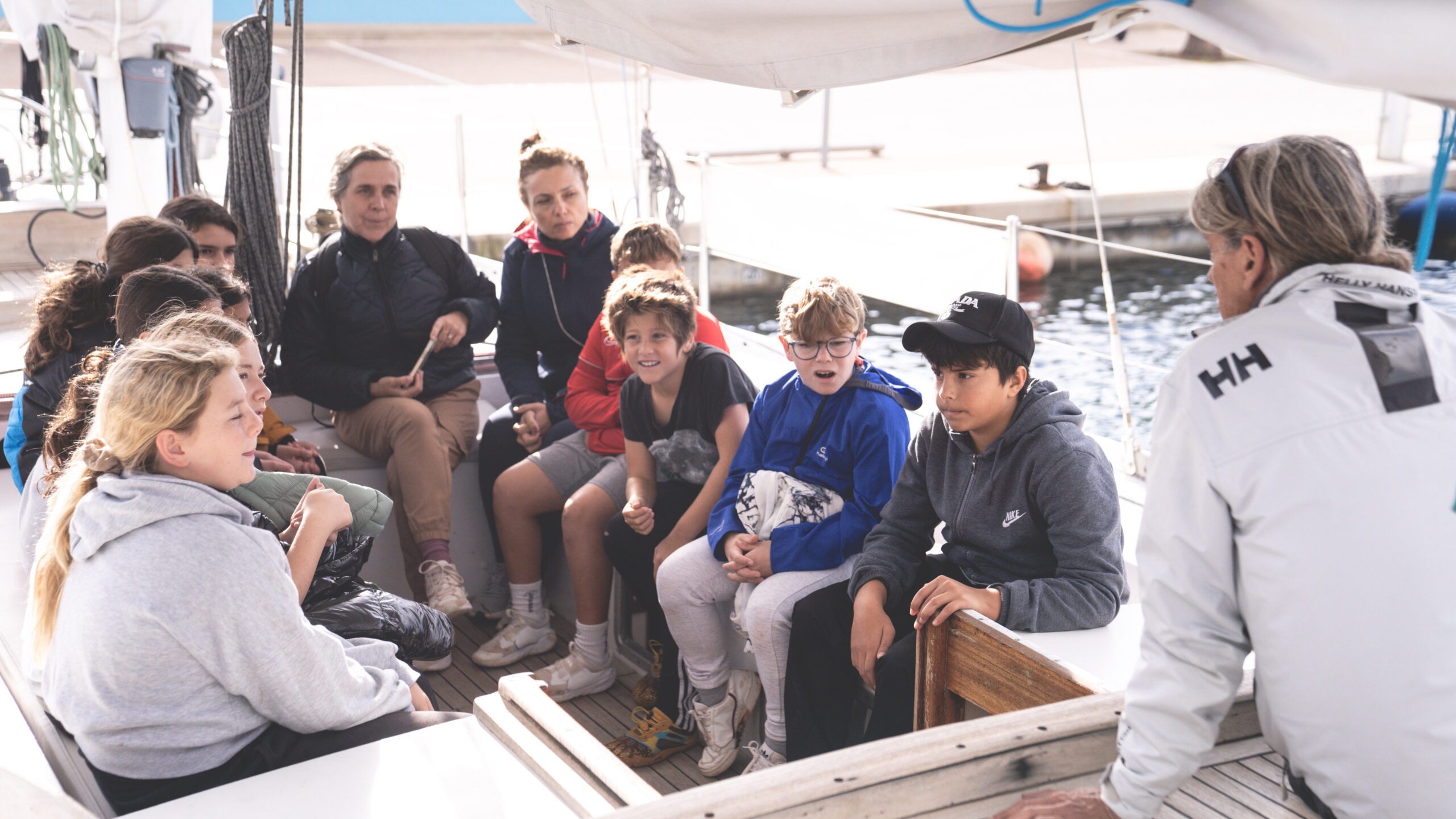
The final phase of the program took place at sea. In collaboration with Love the Mediterranean by Trueworld, students boarded the electric sailboat Galaxie, one of the largest of its kind in the world. The vessel itself became part of the lesson, demonstrating how technology and environmental responsibility can move forward together.
On the water, the ecosystems explored in the classroom revealed themselves in their real context. Posidonia meadows, marine biodiversity, the delicate balance of the coastal environment. The animals encountered through story and workshop were now part of a living system beneath the surface.
This layered structure, book, workshop, cleanup and sailing, formed a pedagogical arc that activated emotion, critical thinking and direct experience simultaneously. It allowed students to move from empathy to responsibility, from observation to participation.
For author Sophia Brucklacher, seeing her story integrated into this process has been deeply meaningful.
“When I wrote Kio, I hoped children would feel connected to the ocean,” she says. “Seeing the book actively worked through in classrooms, watching it generate questions and lead to real action, has given the story a new dimension. Knowing that a copy now exists in all 43 primary schools on the island ensures that the conversation continues beyond this program.”
The distribution of the book to every primary school in Ibiza anchors the project within the island’s educational fabric and secures its continuity over time, allowing the story to remain an accessible pedagogical tool for teachers and students alike.
The program was financed by the Conselleria d’Agricultura, Pesca i Medi Natural of the Govern Balear, reflecting an institutional commitment to environmental literacy and marine protection.
More than a series of activities, “Discovering Kio on the Galaxie” proposes a coherent model of experiential education, in which sustainability is not presented as an isolated subject, but as a framework through which to understand the world.
The ocean ceases to be content and becomes relationship.
And when a story enters the sea, it begins to shape how the next generation understands responsibility.