
How Creatives for the Planet brought art, memory, and cups made from rice husk to the TEDxIbiza stage.
“Thinking Cultura” was the theme TEDxIbiza set for itself this year, a phrase that inhabits two languages and asks what an island chooses to preserve. It is a broad question, and the event answered it in many ways across the day. But one of the most direct answers arrived before the first talk began, in the form of a reusable coffee cup.
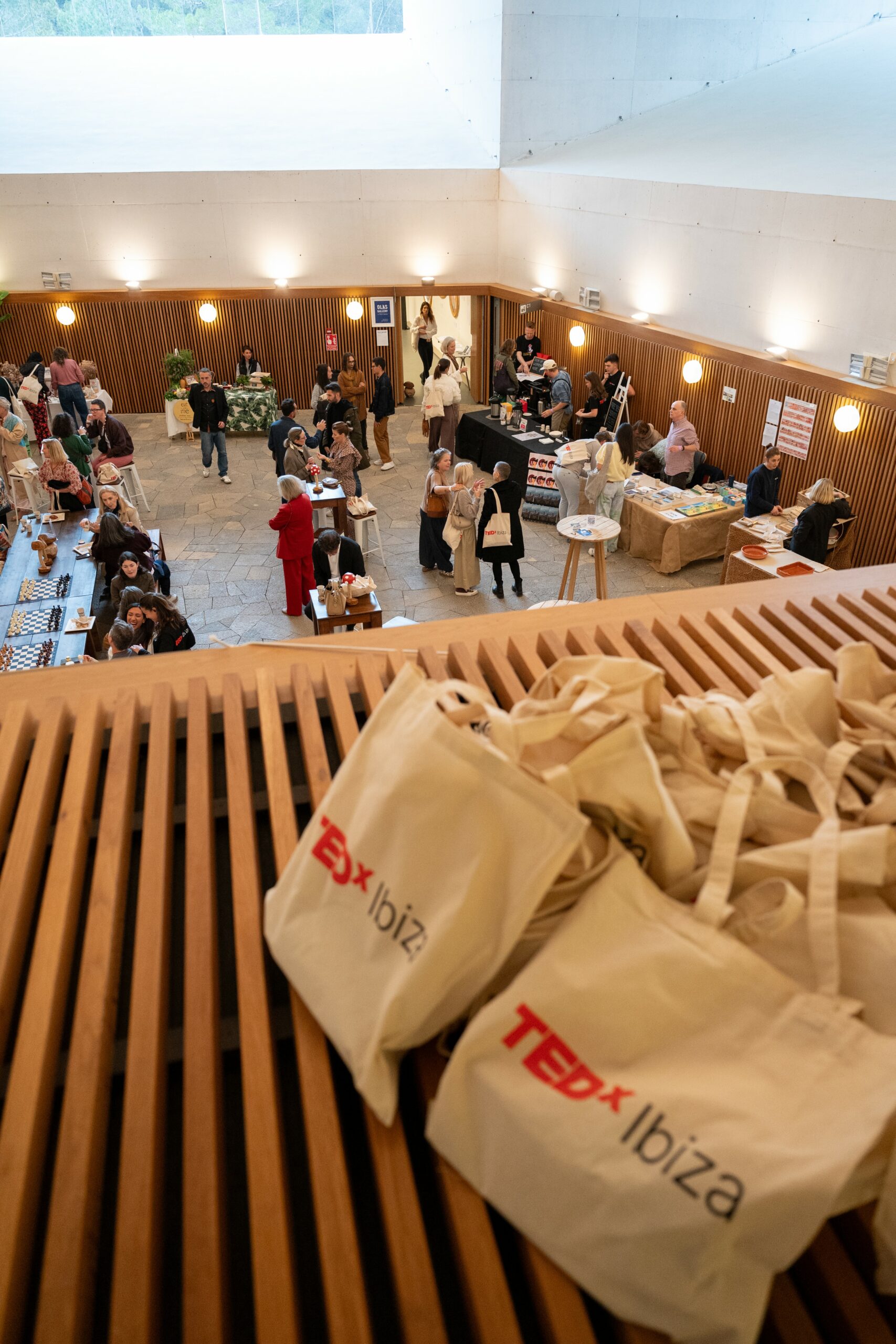
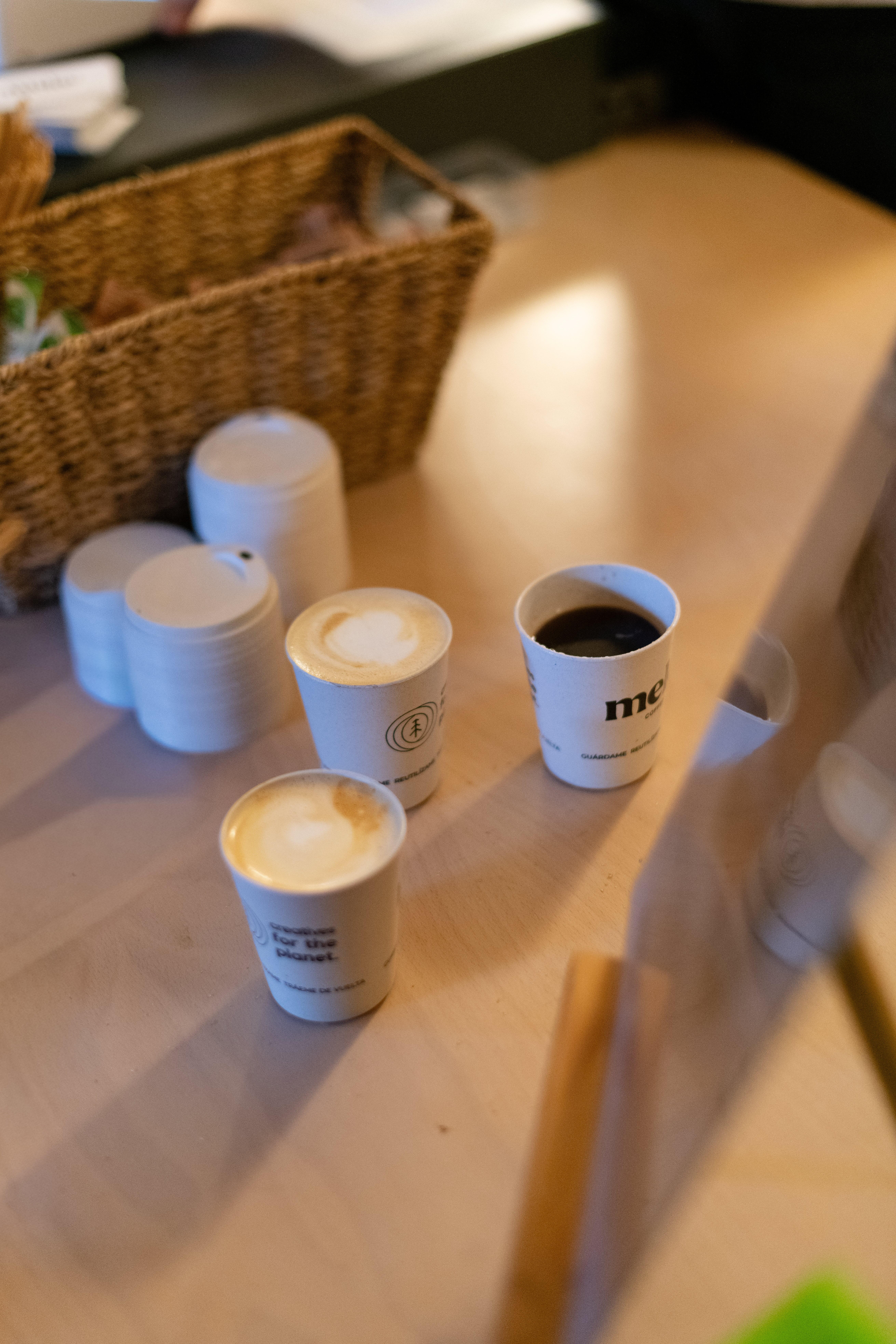
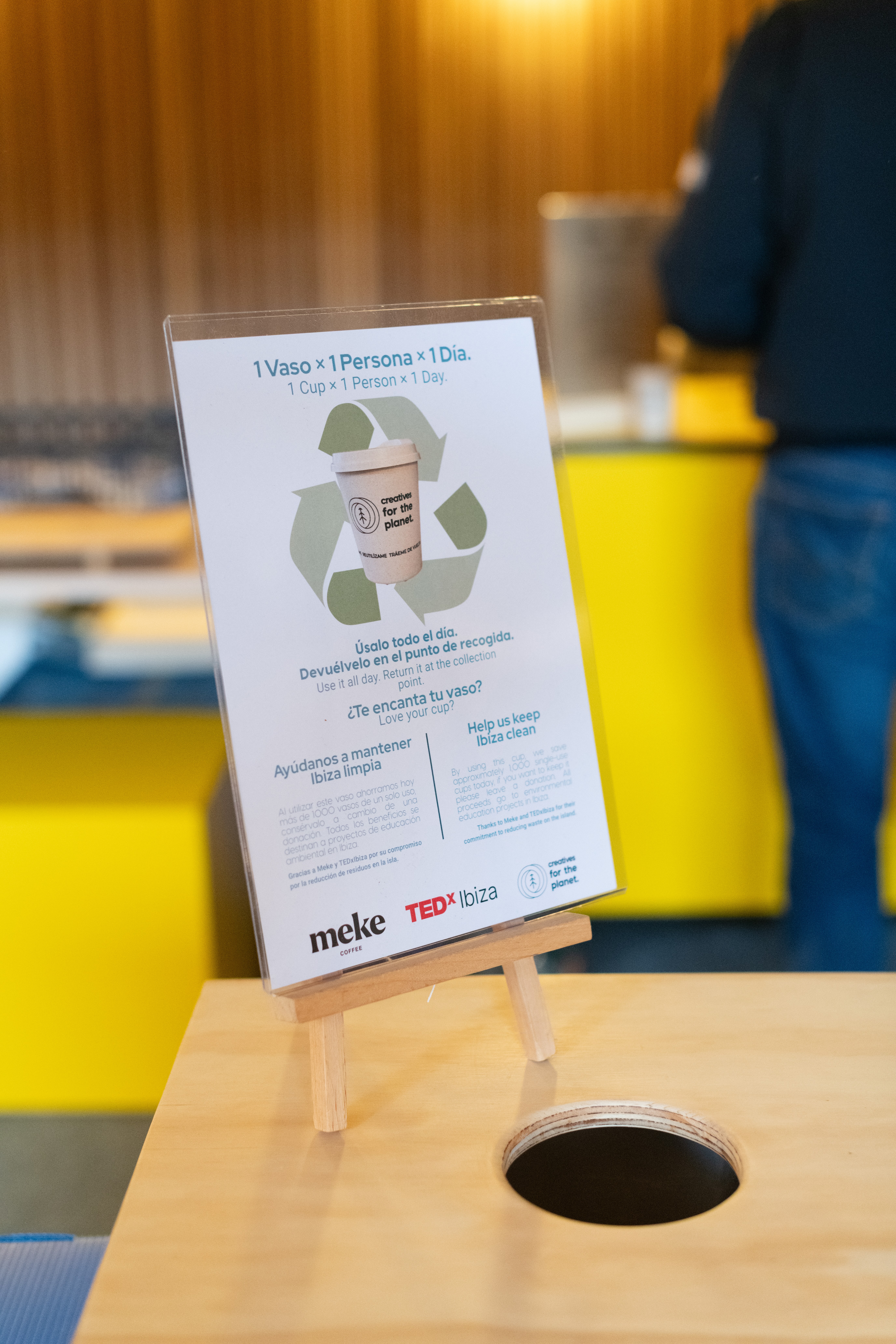
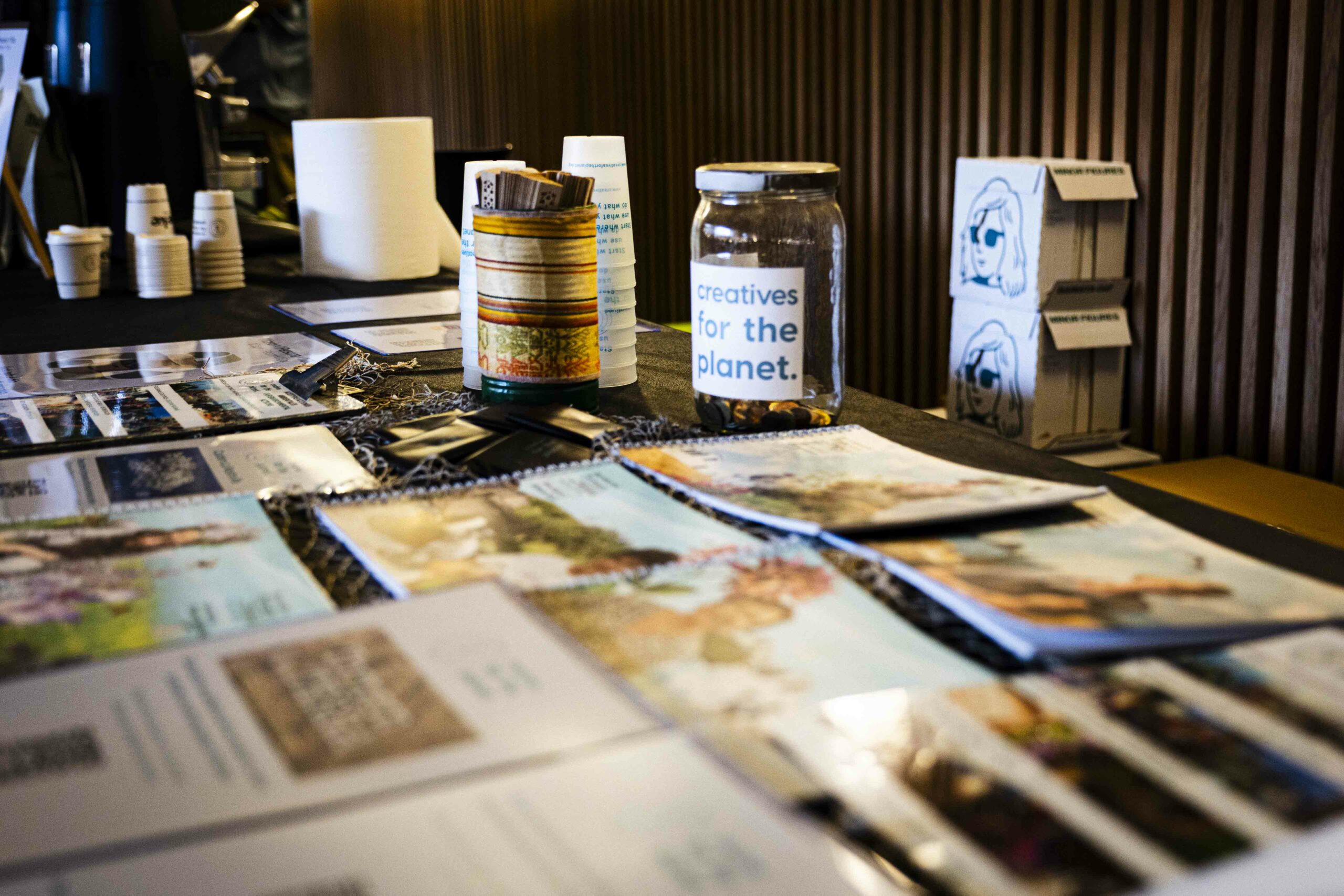

Each of the five hundred or so people who passed through TEDxIbiza’s doors received a cup made by Ecogots, produced in collaboration with Mekes, an Ibiza-based coffee roastery. If each person drinks one coffee at an event of this scale, the result is five hundred cups. If they drink two, the number doubles. Across a full day, espressos, filter coffees, teas, the backstage technical team running on caffeine, over a thousand drinks were served. In the default version of event hospitality, every one of those cups is used for approximately four minutes and then discarded. A thousand pieces of waste completing the fastest possible journey from manufacture to the bin: use and throw away.
TEDxIbiza had decided that was not the kind of cultura it wanted to represent. And in fact, it had no choice: the 2021 Balearic waste law already prohibits single-use items at events, regardless of the material they are made from. What is less common is an event that treats that law not as a bureaucratic formality but as genuine intention. “It was a good step in the right direction,” says Hayley Hobbs of TEDxIbiza. “We’re trying to solve one problem at a time. Just the fact that we didn’t fill the bin with a thousand paper cups — that’s already something.”
Mekes, which roasts with care and works with intention at origin, agreed to finance the purchase of the alternative. The cup Ecogots makes is built with Oryzite®, a compound developed over more than a decade from the biomass of rice husk, the part of the grain that no one eats, sourced from the Ebro Delta, fewer than three hundred kilometres from the island. It replaces the bulk of the polypropylene that a conventional cup requires, reducing the carbon footprint by up to 72 percent. But the polypropylene that remains is not incidental: it is what makes the cup resistant to hot drinks, dishwasher-safe, capable of withstanding repeated reuse. The two materials work together, the husk for its ecological profile and its role in reducing plastic use, the PP for its resilience. This is also why the cup is deliberately not biodegradable. As the conversation around the cups made clear, biodegradable sounds better than it is. Without industrial composting infrastructure, which does not yet exist at scale on Ibiza, a biodegradable cup is, as Harmony Hita Torres of Creatives for the Planet put it, simply another piece of waste. The Ecogots cup goes into the yellow recycling bin at the end of its useful life, where the material is shredded, processed, and injected into new products. The circle is real, not aspirational.
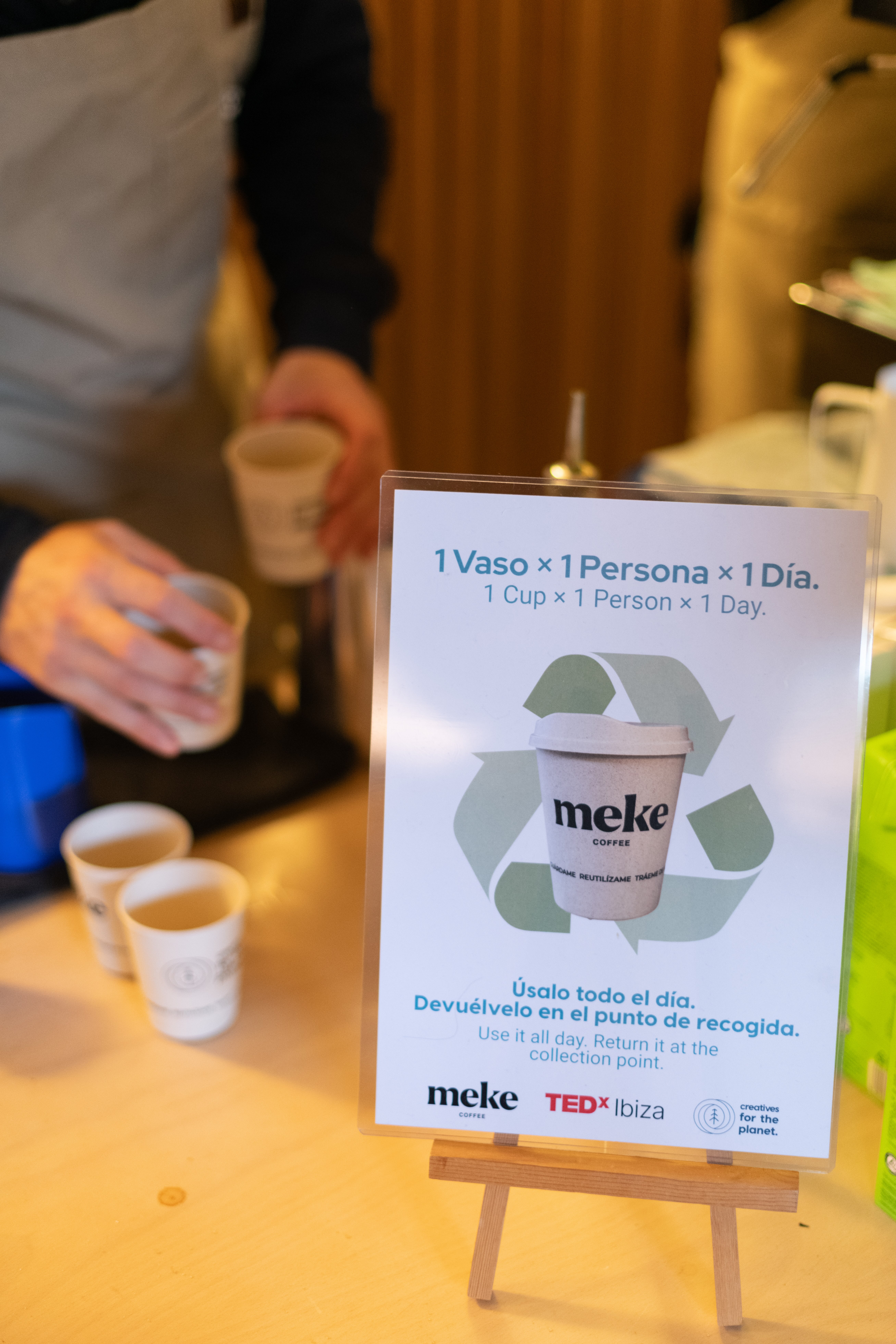
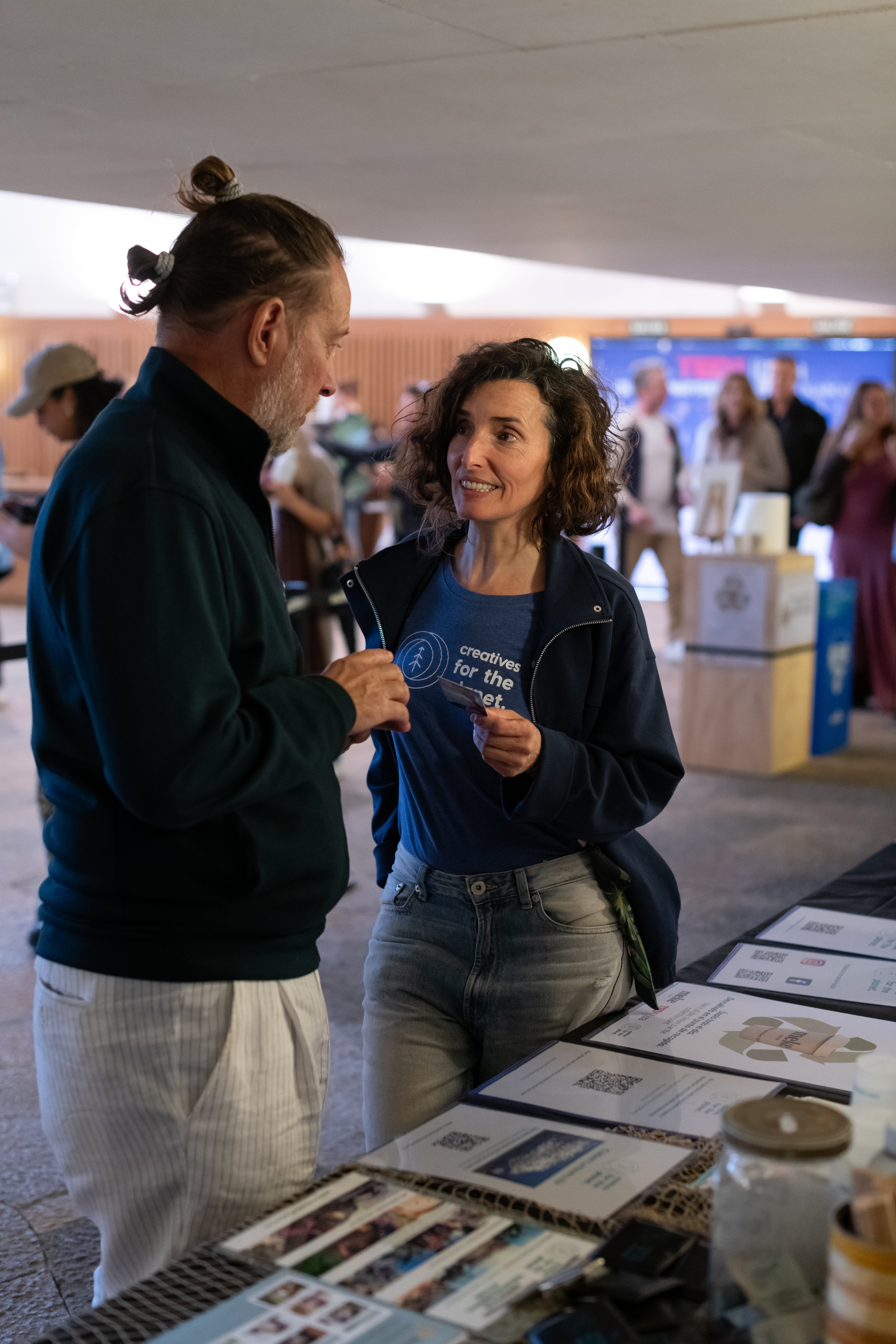
At TEDxIbiza, one cup per person circulated throughout the day. By the end of the event, 350 cups had been returned. Around 250 went home in pockets and bags, some perhaps as souvenirs, others simply because the people carrying them had not fully understood the system. “Even one of our own team members, cup in hand, asked: what do you mean it’s reusable? What do you mean?” recalls one of the organizers. “It says ‘reuse me’ right on it. There is an education piece to be done.” “If we calculate around a thousand drinks served and we had 600 cups produced, that means 350 cups still available for future events,” says Sophia Brucklacher of Creatives for the Planet. “The main goal of reducing single-use waste was clearly met.”
The cleaning lady, arriving to assess the morning’s waste, was surprised. Almost no rubbish. Then lunch arrived, with paper packaging and single-use plates delivered by other suppliers, and the bin filled quickly. It was a precise illustration of how far the logic of a single partnership can reach, when not everyone is working toward the same goal. “The only way this whole system really works,” says Samuel Swinburn of Mekes, “is to give it a value, for people to pay for their cup. If they pay two euros, they either take it home or return it and get the euro back. That’s how it works at every festival where it actually works, because if you throw it in the bin, you lose two euros.” The deposit model is the next step to take. For now, the remaining cups are being introduced into the Mekes café, made available to customers as a replacement for single-use takeaway packaging. Mekes supplies around forty-five cafés and restaurants across the island. Each one is a potential node in a system that doesn’t yet fully exist, but is being built, one cup at a time.
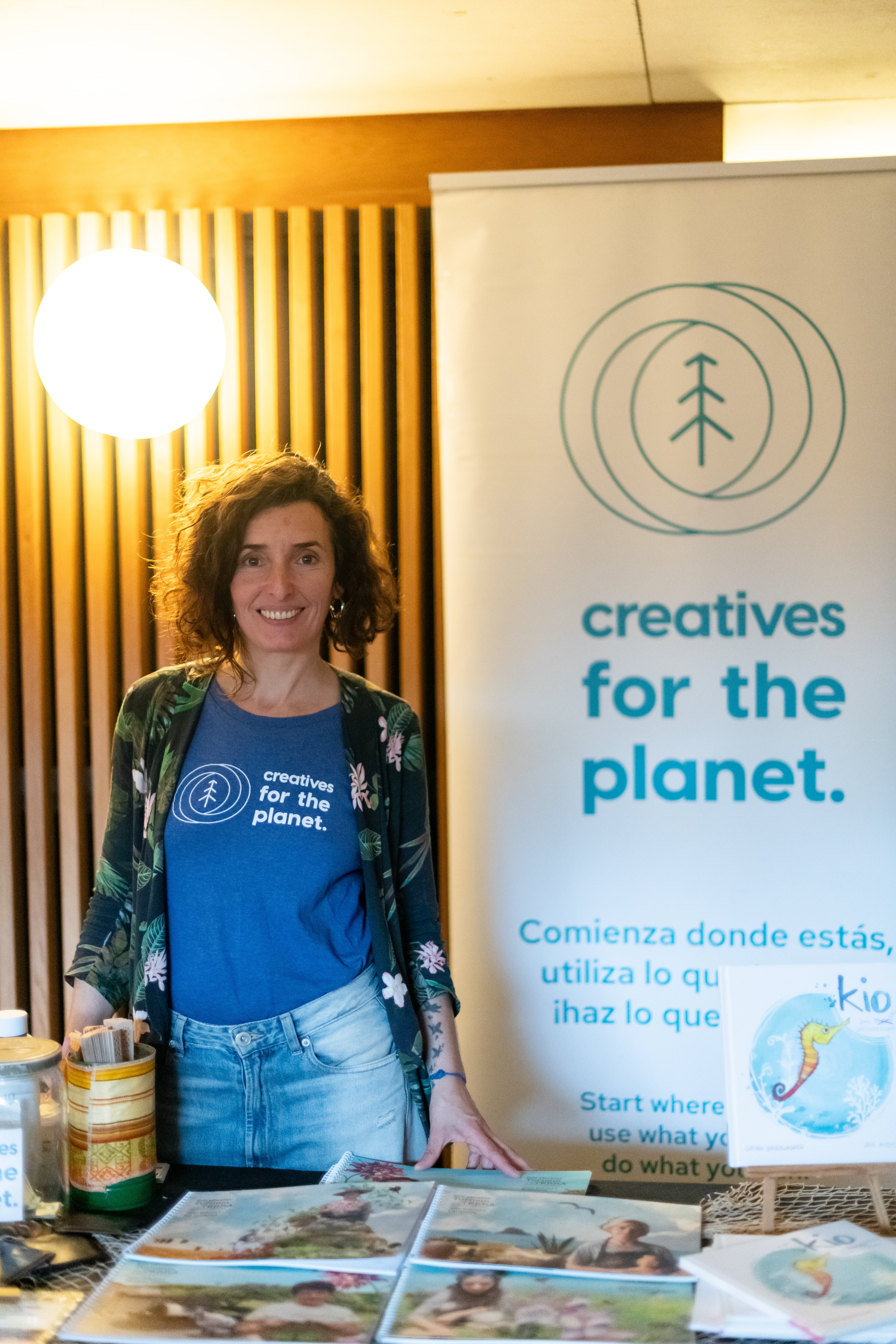
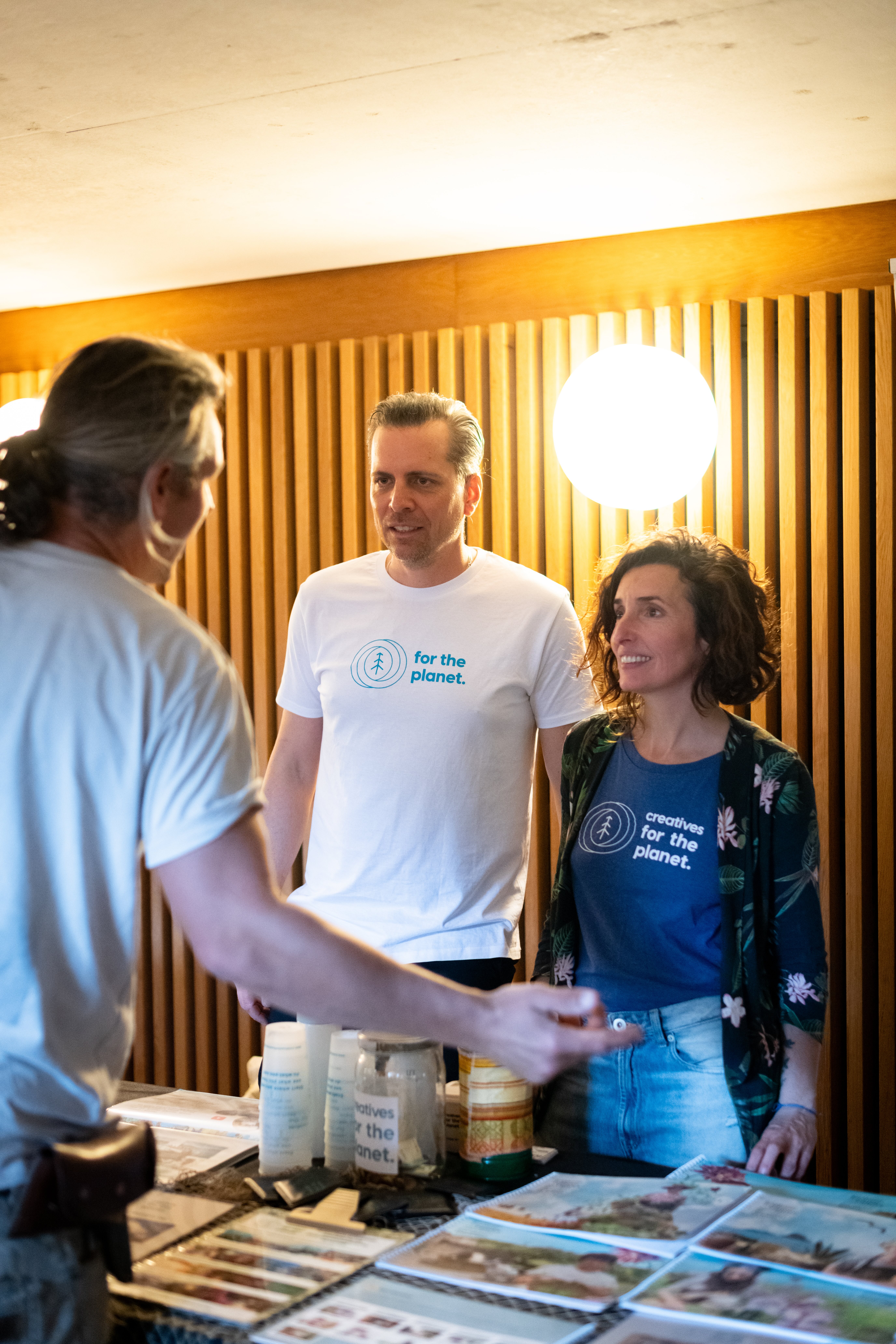
This is the logic Creatives for the Planet has been developing on the island for some time. The Mekes cup is not the NGO’s first reusable cup project: it has been present at the Fantasía Ibiza Festival and has collaborated with events at Atzaró, Benimussa Park, and other festivals beyond the island. This has been one more step within a deliberate effort to build an eco-economy in which the objects that circulate at events are designed for reuse. The goal is zero waste, not as a slogan on a banner, but as the real logic of what gets ordered, served, collected, and reused. Though it is slow work. The infrastructure on the island is not yet ready: local councils pay for reusable cups at their town fiestas but have no washing facilities of their own, outsourcing the cleaning to various partners, when the ideal would be to centralise this service, even fund it with public money, since it would generate significant savings in waste costs. Ibiza is soon to begin sending its waste to Mallorca, which means these conversations are already on the table. Deposit, return, and refund systems and the circular economy are in development, in legislation, and in conversation with public administration. “We are in the pioneer phase,” says Sophia. “It’s always more complicated until people get used to it. But that’s where change starts.”
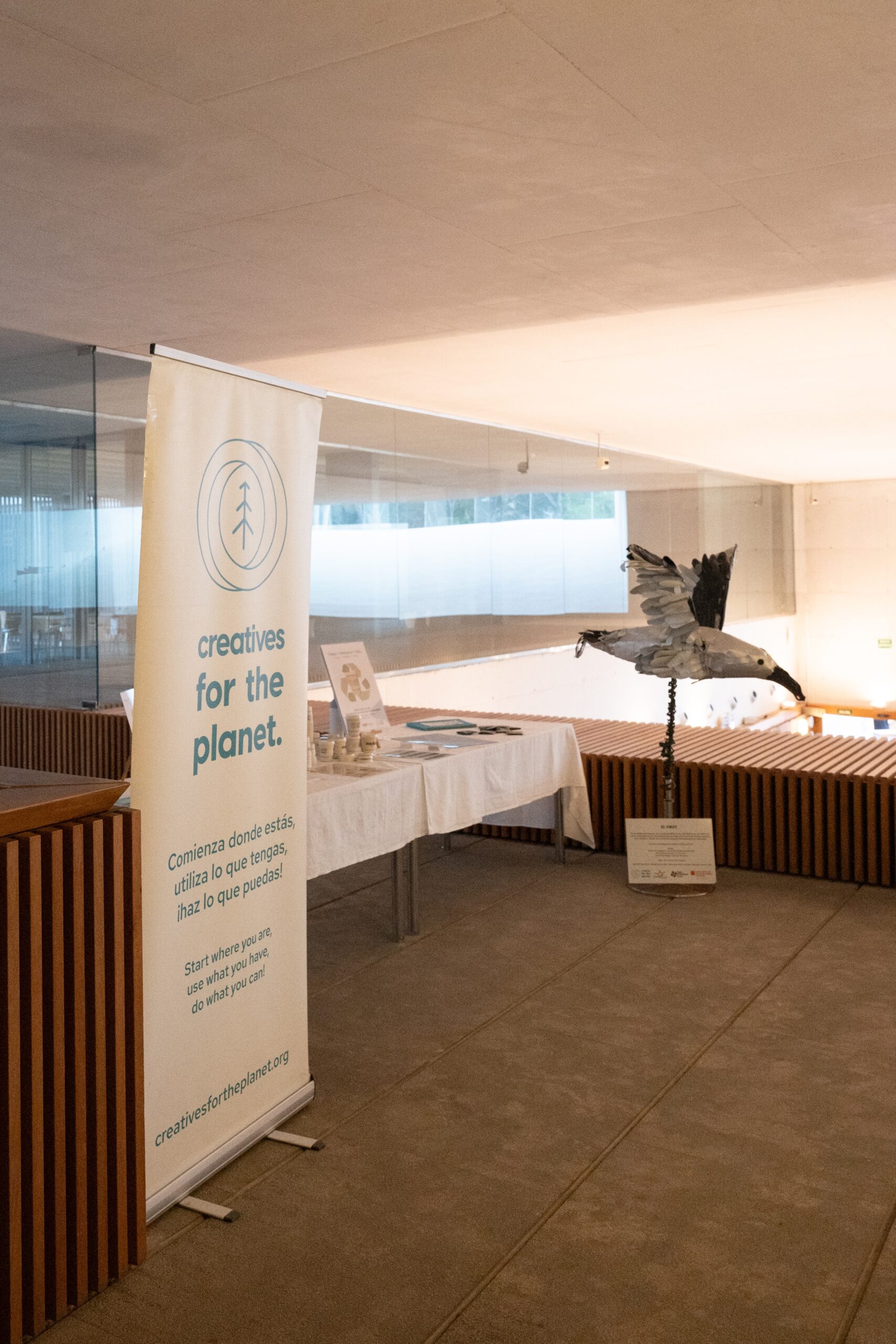
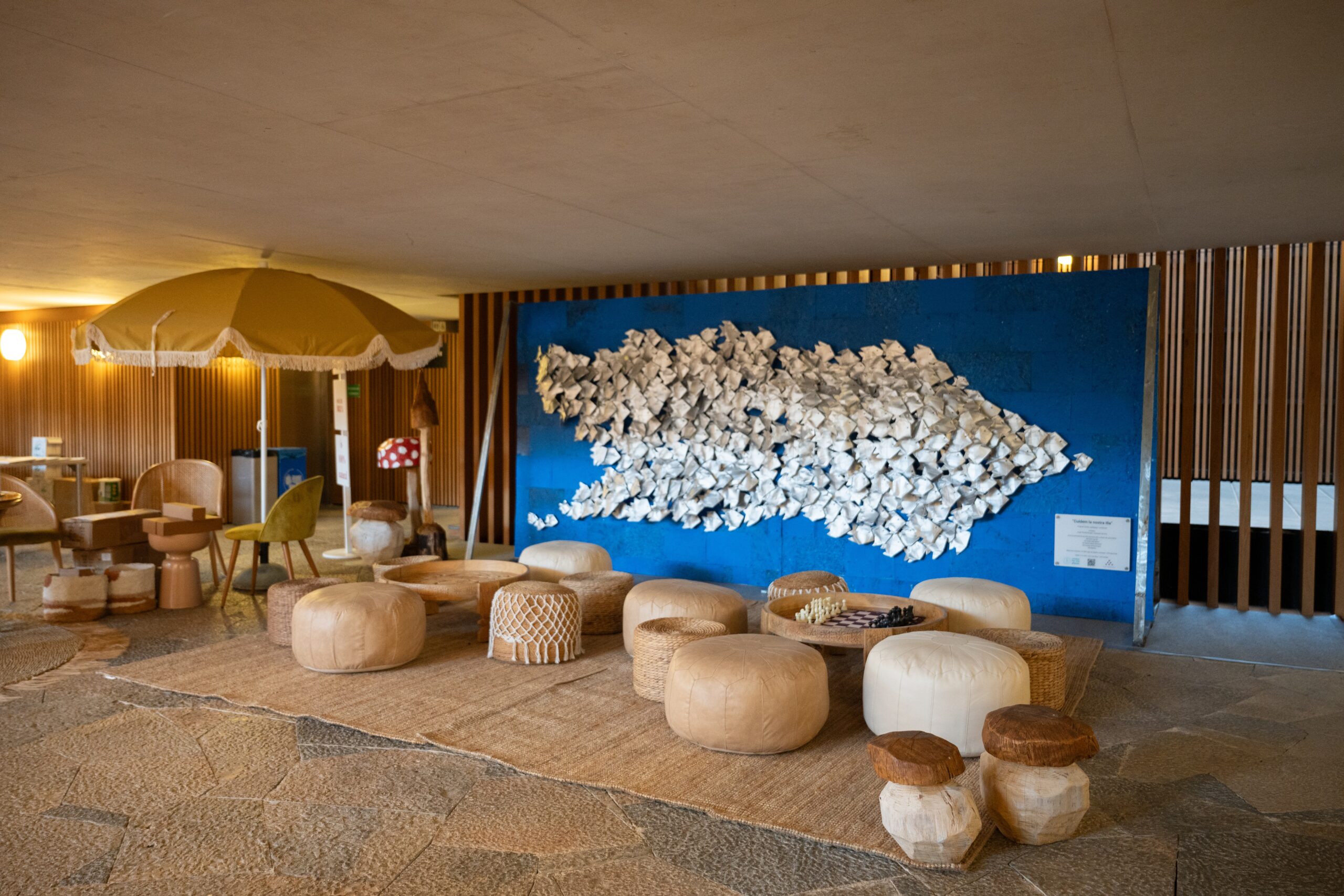
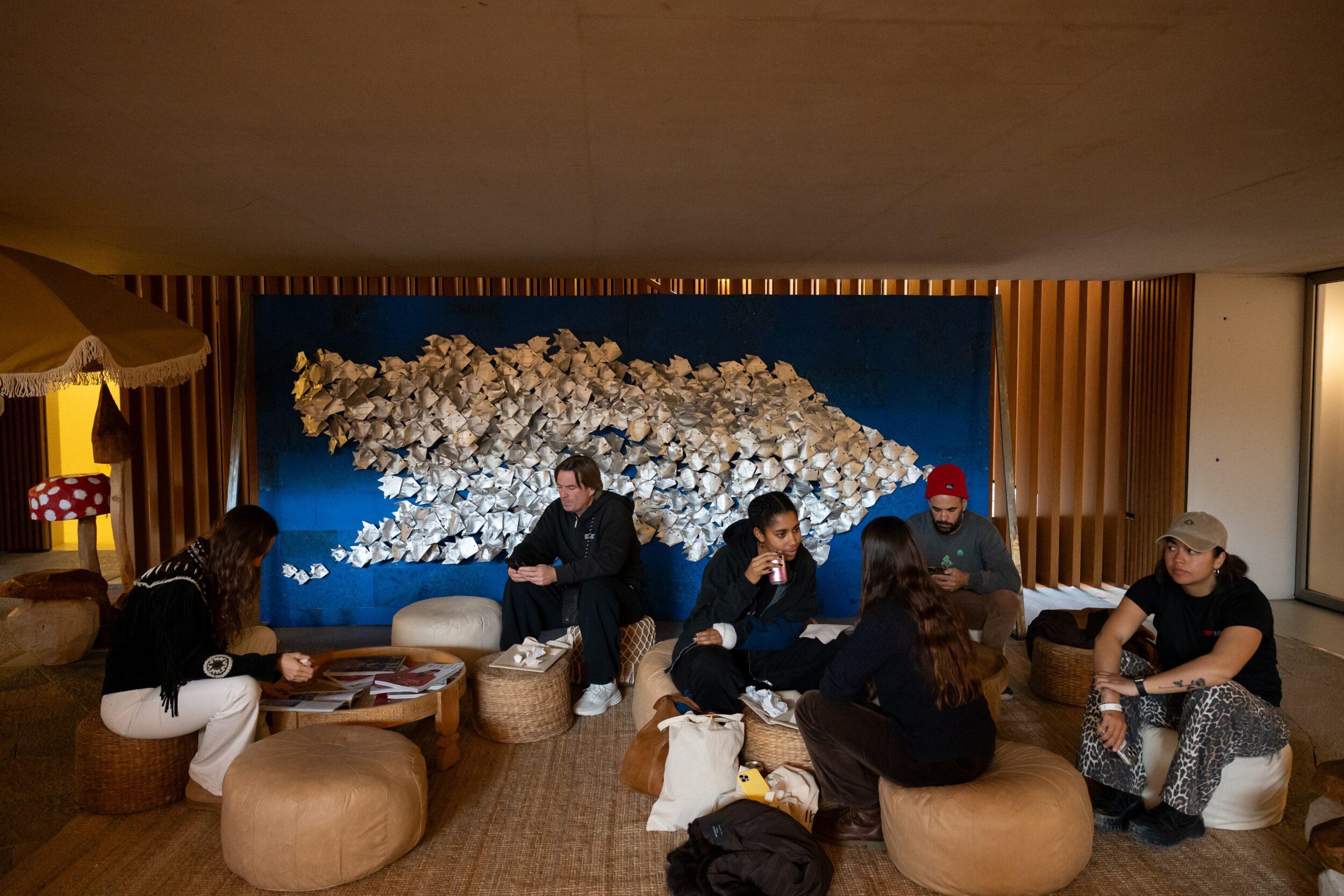
Standing in the same space where the cups moved through people’s hands was a work of art: Cuidem la Nostra Illa, Let’s Take Care of Our Island. This nine-square-metre mural, created from 49 kilograms of shredded and pressed plastic caps forming a seabed, holds 490 tetrapaks transformed into fish by students from five secondary schools across the island of Ibiza. Artists Jorge Pineda Bruges and Ezequiel Herrera assembled the work in the Plustic Lab studio, a partner organisation that transforms plastics into new objects. The result is not a flat image but a constructed environment built from waste, with depth, shadow, and relief that shifts depending on where you stand, and that sends a clear message: we must protect marine biodiversity and reduce our impact and our waste. What the mural and the cup share is a concern for ecological footprint, for the distance an object travels from its origin of manufacture to the end of its life. We must consider that less than five percent of the plastic we carry with us, not our shoes, not our polyester backpack, not our pen, will actually be recycled. The Ecogots cup, made from an agricultural by-product and designed for a minimum of two hundred uses before entering the recycling stream, and the mural built from caps and discarded packaging that students transformed into art, carry the same reflection: that the material we use is not neutral, that what something is made from, how long it lives, and where it ends up all form part of the same question.
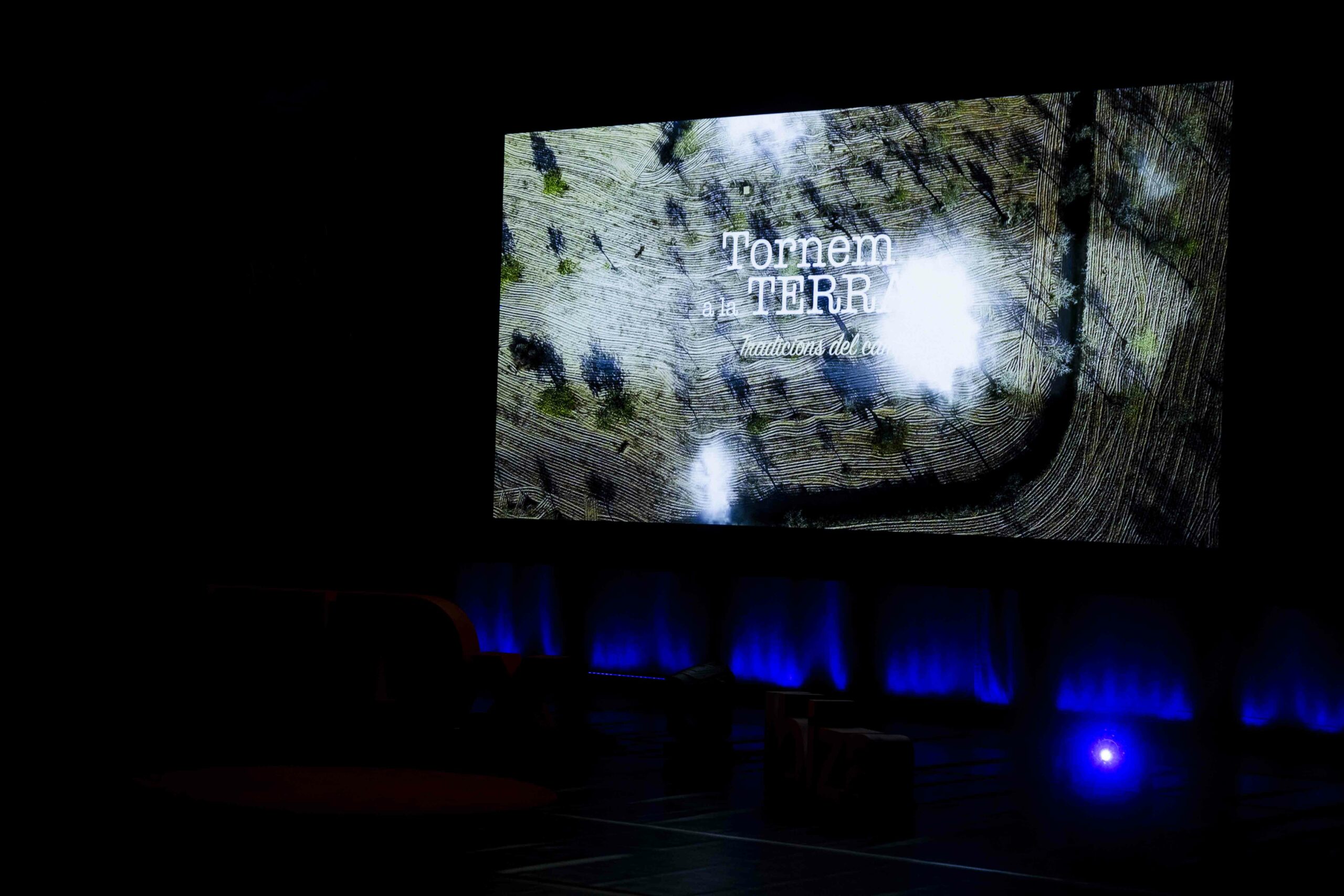
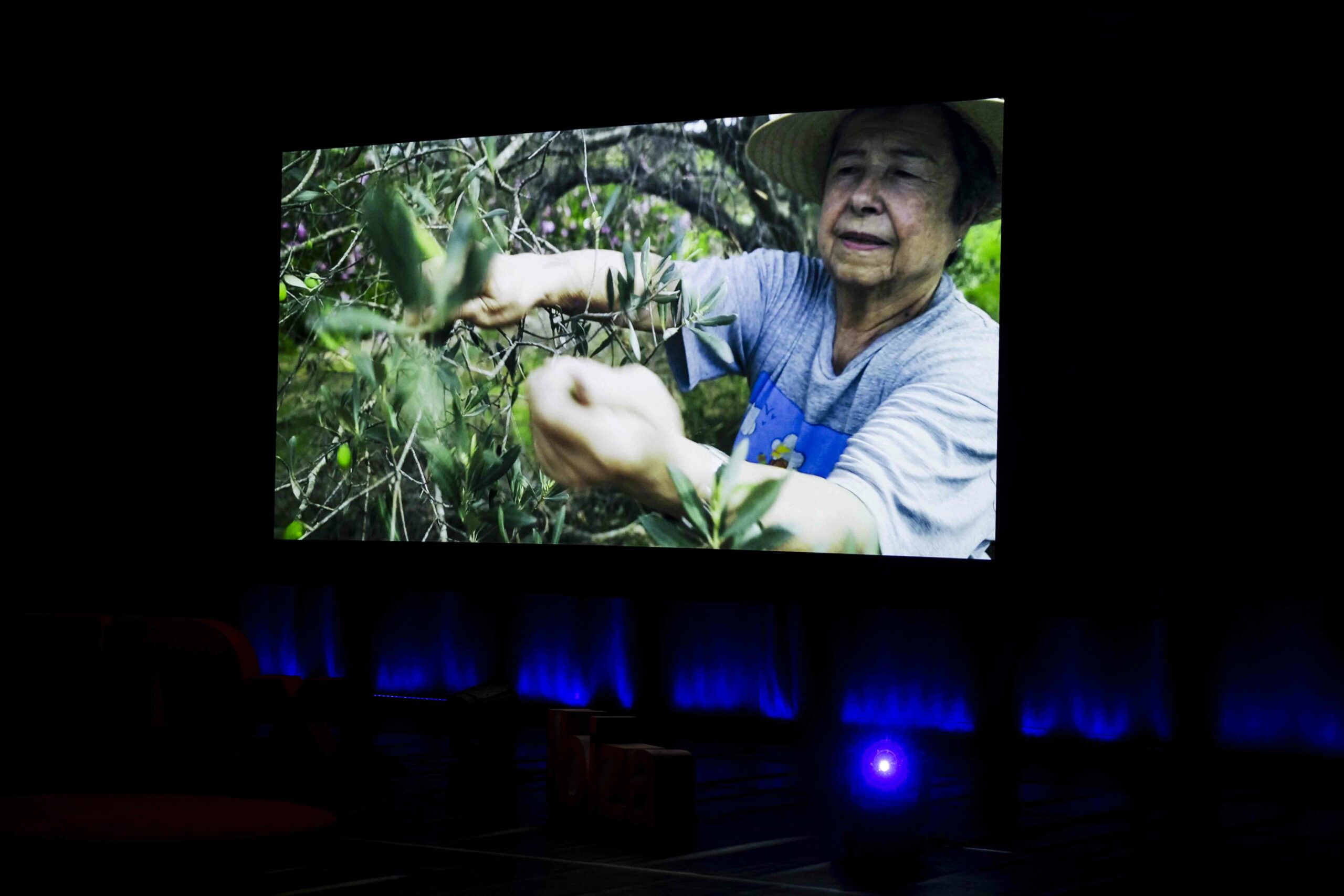
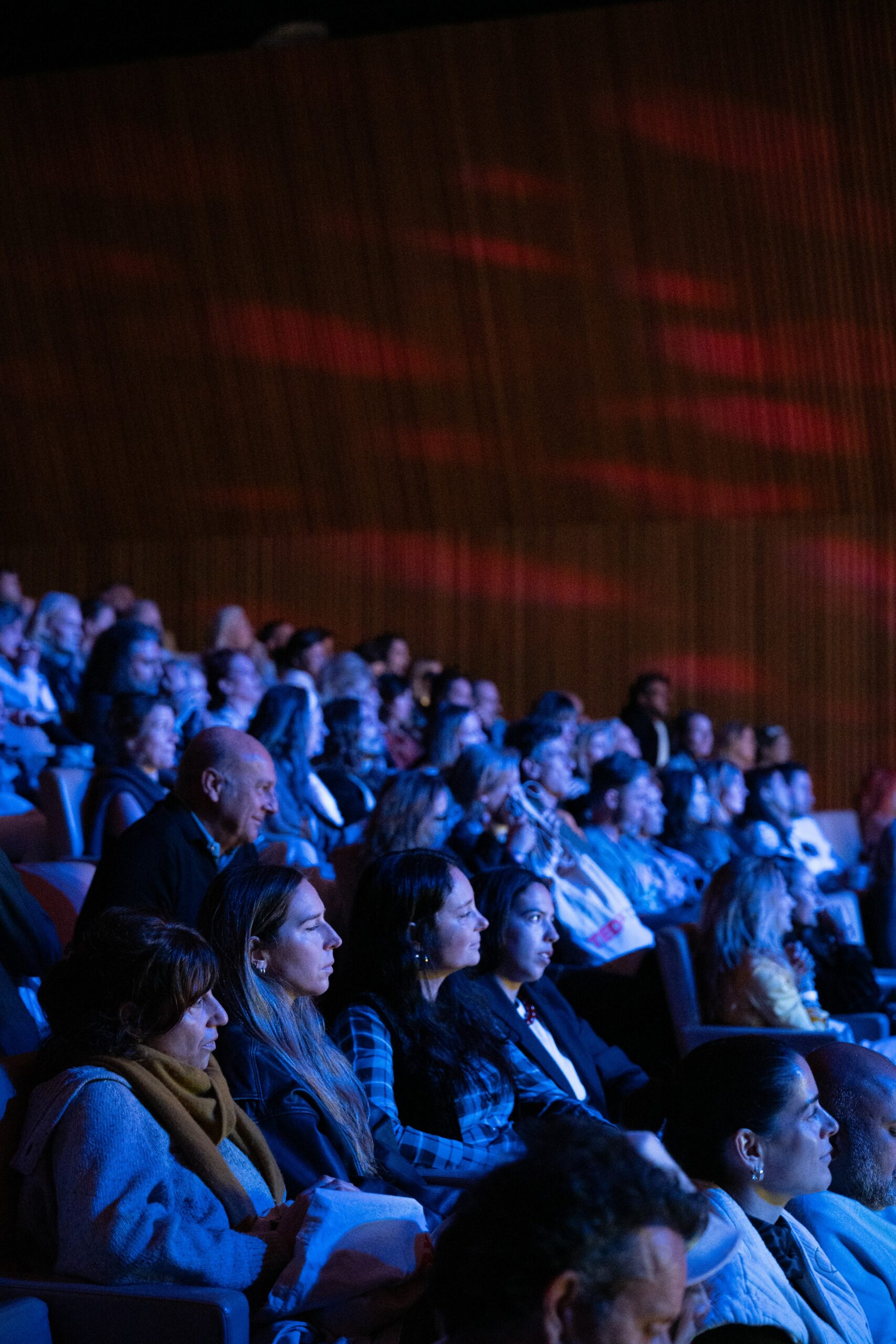
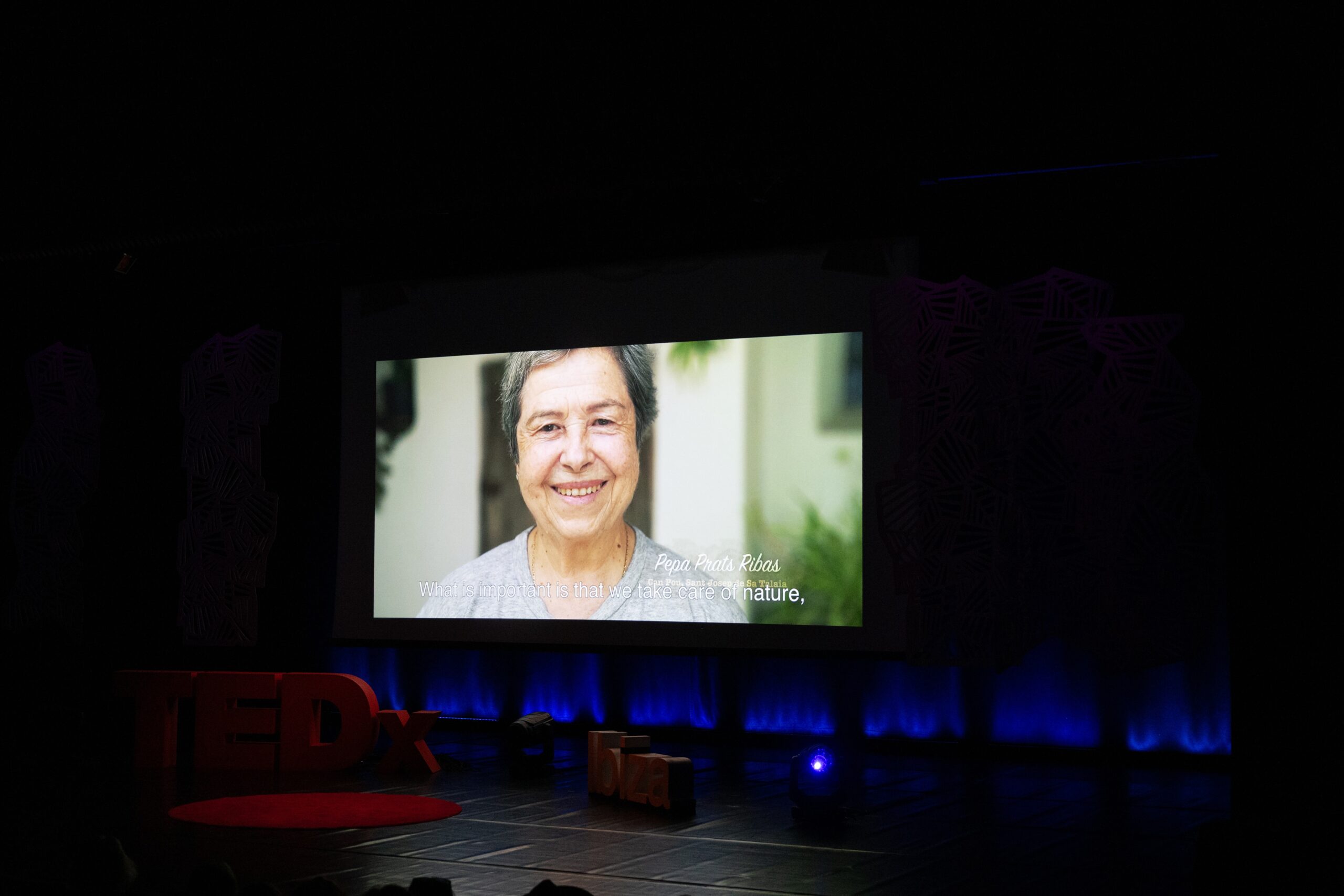
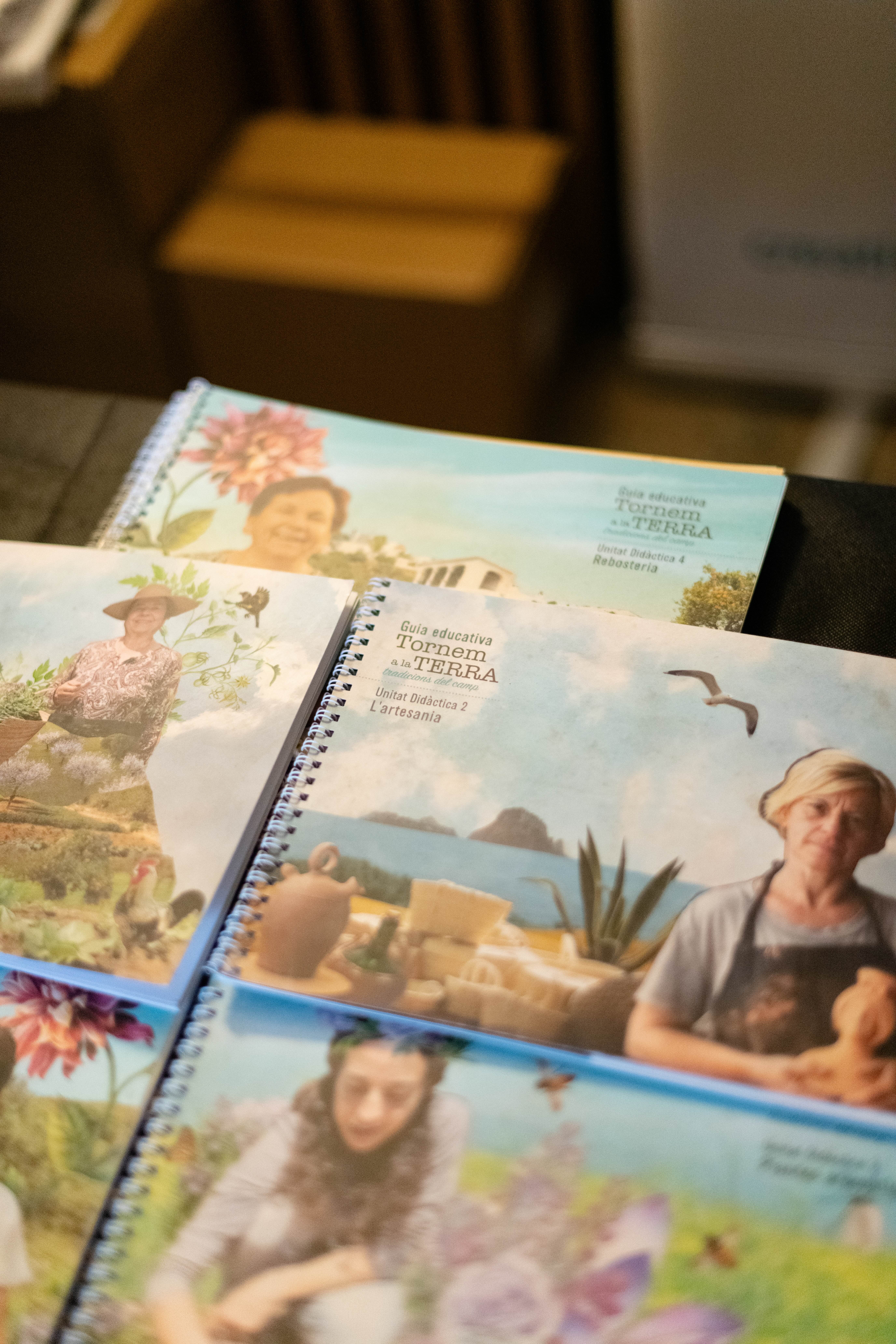
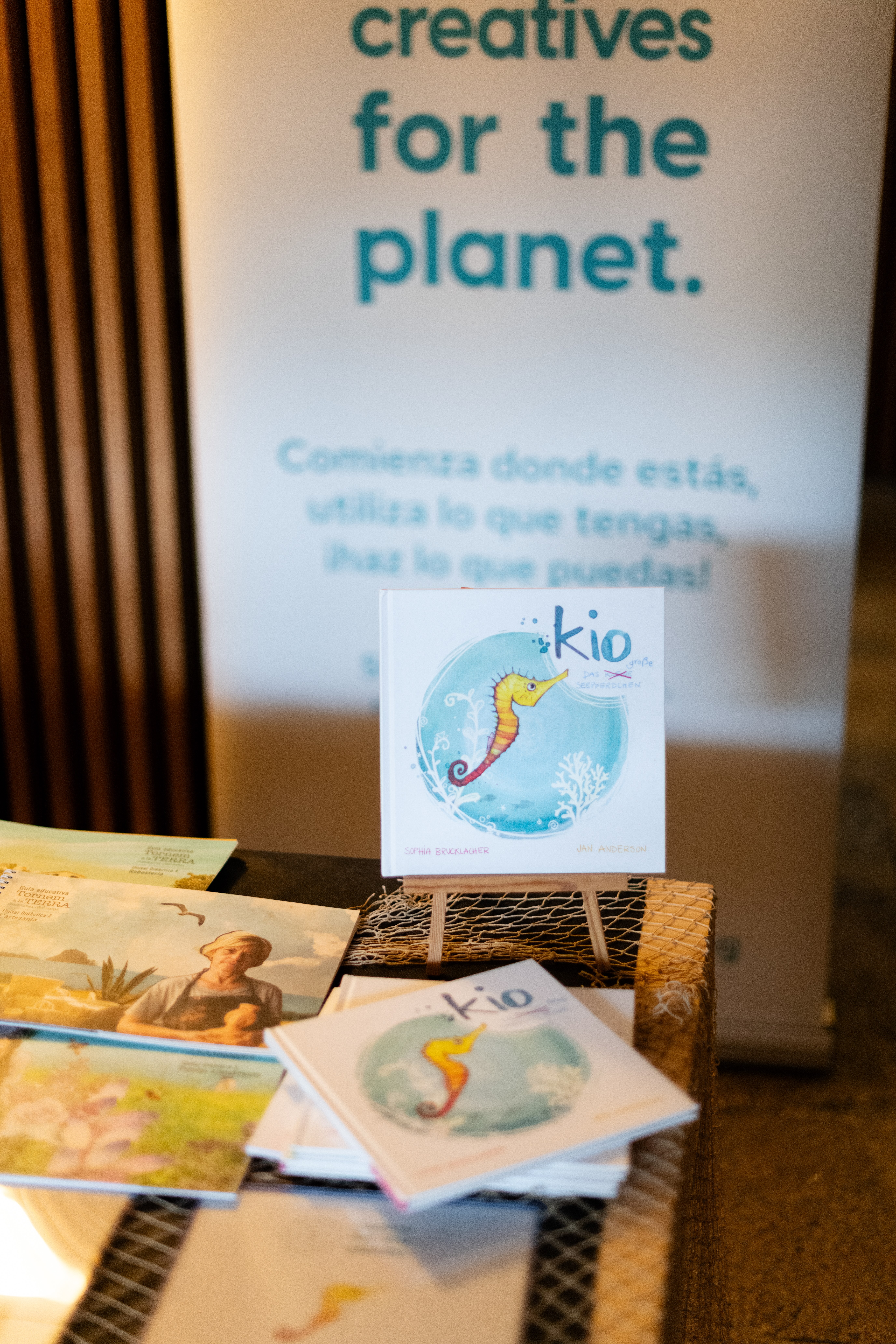
The third contribution Creatives for the Planet brought to the TEDxIbiza stage was, in many ways, the one that most fully integrated with the day’s theme. Among the talks, an ethnoclip from the audiovisual series Tornem a la Terra was screened. This piece celebrates the vital work of rural women and the reasons why reclaiming ancestral knowledge is indispensable. This important record is in the hands of Harmony Hita Torres and Jorge Pineda Bruges, who have sought funding from various local and regional authorities as well as private sources from those who believe in the importance of preserving these traditions. For Harmony, whose project has until now reached students through classroom workshops and educational guides, screening it on the TEDx stage offered the opportunity to bring the message to a different audience. “These local women reach out from the screen with their simplicity and clarity, and remind us that what matters is caring for the land, which is where life itself originates. Only through the knowledge of our environment can we truly love and care for it.” Seeing that argument made not in a classroom but on the stage of a public event like this one, in front of an audience reflecting on what cultura means, was a different kind of reach.
And for the women who shared their knowledge in front of a camera, women who understand the properties of plants, who know how to read the seasons, whose practical intelligence had never needed an audience, one was given to them, perhaps for the first time, at this scale. On a stage built around the question of what cultura means to an island, their answers were the most direct: there is knowledge that was formed here, that has its roots here, and that has not yet been lost.
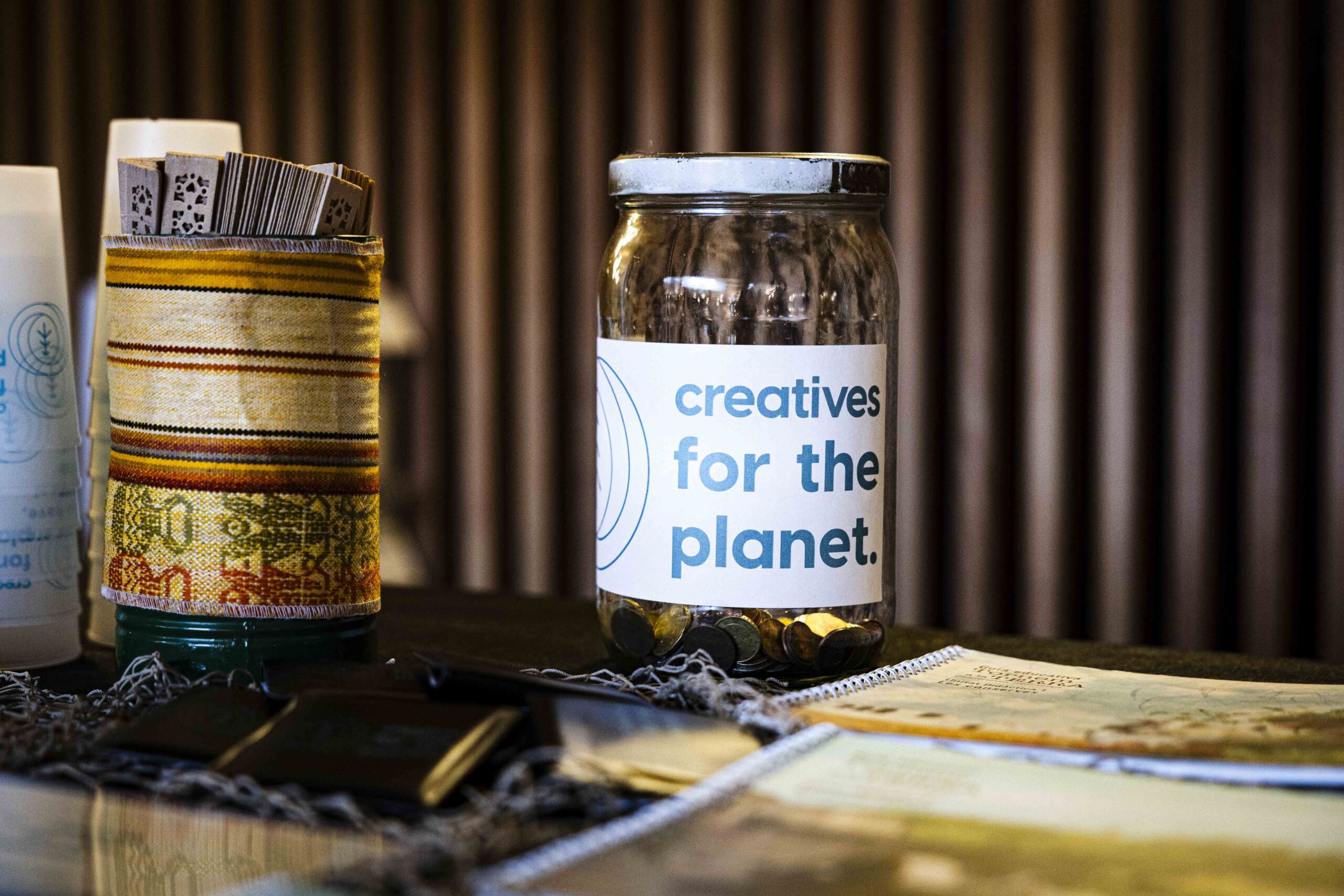
Several small moments from the day stayed with the team afterward. At the end of the event, several people congratulated the team on the quality and message of the film, and others asked if they could keep their cup. One woman even wanted to take hers home as a gift for her daughter and left a donation for the organisation. She had decided it was the best gift she could give.
For Creatives for the Planet, “Thinking Cultura” has been the material reality of a cup made from agricultural waste, the collective labor of a mural built from discarded packaging and plastics, and the voice of a woman speaking about olives in a courtyard that predates the conference halls of the island. TEDxIbiza gave Creatives for the Planet a stage not to deliver a message but to demonstrate one, in three distinct registers, each asking the same question: what do we make? what do we preserve? how do we reduce our impact, and what do we choose to pass on? The cups are back at Mekes. The mural keeps traveling. The documentary archive grows.
What remains, in the end, is the question the woman with the donation already answered for herself.
Text: Sophia Brucklacher
Pictures: Gypsy Westwood